<?xml version="1.0" encoding="utf-8"?>
    <feed xmlns="http://www.w3.org/2005/Atom">
      <id>https://wolfgirl.dev/blog/</id>
      <title>PolyWolf's Blog - #cohost</title>
      <subtitle
        >all posts tagged "cohost" on a blog written by PolyWolf</subtitle
      >
      <icon>/apple-touch-icon.png</icon>
      <link href="/tags/cohost/rss.xml" rel="self" />
      <link href="https://wolfgirl.dev/blog/" />
      <updated>2025-09-27T03:21:29Z</updated>
      
    <entry>
      <title><![CDATA[Coho Photo Zine – Yes-and-ism]]></title>
      <link rel="alternate" href="https://wolfgirl.dev/blog/2025-09-26-coho-photo-zine-yes-and-ism/" />
      <id>https://wolfgirl.dev/blog/2025-09-26-coho-photo-zine-yes-and-ism/</id>
      <published>2025-09-27T03:21:29Z</published>
      <updated>2025-09-27T03:21:29Z</updated>
      <summary><![CDATA[Recently, I found out about the [Coho Photo Zine](https://coho.photo/), a zine run by former members of the Cohost photography community...]]></summary>
      <content type="html"><![CDATA[<p>Recently, I found out about the <a href=https://coho.photo/>Coho Photo Zine</a>, a zine run by former members of the Cohost photography community whom I really look up to. By "recently" I mean "Tuesday", and their deadline was today (Friday), so I had about 3 days to sort thru my backlog and edit something matching the theme. And I did!! Having some creative pressure was actually very helpful, as was seeing so many inspiring photos by all the other participants.</p><p>The zine is not coming out for a while, and there's no guarantee any of these photos will be in it, so I figured I'd just post them now :3</p><hr><p>The theme for the inaugural zine issue is "yes-and-ism". As per one of the organizers:</p><blockquote><p>it comes from someone asking "is that__?" and the response being "yes, and [long explanation]". it was a unique aspect to cohost style photography that most of us haven't found a place for outside of cohost or the various life raft servers, where the focus was less on the actual image but more on the process of image making and the conversations said processes inspired.</p></blockquote><p>There's more themes from the <a href=https://coho.photo/primer>primer</a> that I tried to incorporate too, like orthorealism + deliberate imperfection, with my overall thrust being "what would look cool after being passed thru a <code>-quality 1</code> encoder?" The end results are better than anything I could have asked for.</p><br><br><br><br><p><img alt="Small cellular and radio antennae are blocked out in high saturation against a gray sky" src=https://static.wolfgirl.dev/polywolf/blog/0199890b-86f7-7336-8574-f85f9bdf76f0/IMG_0540-export.PNG title=antennae></p><br><br><br><br><p><img alt="Straight-on view of a brownstone rooftop against a slightly taller gray brick building and a blocky sky" src=https://static.wolfgirl.dev/polywolf/blog/0199890b-86f7-7336-8574-f85f9bdf76f0/IMG_0780.PNG title=rooftop></p><br><br><br><br><p><img alt="A slight crack in the sky separates poster-shaded monochrome apartment buildings" title="split sky" src=https://static.wolfgirl.dev/polywolf/blog/0199890b-86f7-7336-8574-f85f9bdf76f0/IMG_0806-export.PNG></p><br><br><br><br><p><img alt="Various monochrome pipes of all different sizes line the ceiling in orderly patterns" src=https://static.wolfgirl.dev/polywolf/blog/0199890b-86f7-7336-8574-f85f9bdf76f0/IMG_0517-export.PNG title=pipes></p><br><br><br><br><p><img alt="The ferns underneath a tower supporting a bridge have become unnaturally shaped & colored due to the compression" src=https://static.wolfgirl.dev/polywolf/blog/0199890b-86f7-7336-8574-f85f9bdf76f0/IMG_0369-export.PNG title=undergrowth></p><br><br><br><br><p><img alt="Sickly yellow warped windowpanes line flanking office buildings, themselves banded against a banding black night sky" title="office buildings" src=https://static.wolfgirl.dev/polywolf/blog/0199890b-86f7-7336-8574-f85f9bdf76f0/IMG_0735_stage2.png></p><br><br><br><br><p><img alt="An excavator, light SUV, and graffiti are all lightly touched by compression artifacts, the colors unnaturally saturated" title="parked vehicles" src=https://static.wolfgirl.dev/polywolf/blog/0199890b-86f7-7336-8574-f85f9bdf76f0/IMG_0330.PNG></p><br><br><br><br><p><img alt="Square green highlights for red algae buildup on calm gray-brown water, rippling out toward the bottom of the frame" src=https://static.wolfgirl.dev/polywolf/blog/0199890b-86f7-7336-8574-f85f9bdf76f0/IMG_0365.PNG title=canal></p><br><br><br><br><p><img alt="A pink and blue sunset gives way to highly compressed dark gray clouds" src=https://static.wolfgirl.dev/polywolf/blog/0199890b-86f7-7336-8574-f85f9bdf76f0/IMG_0663-export.PNG title=sunset></p><br><br><br><br><hr><p>I'll have a making-of post coming soon hopefully :)</p>]]></content>
      <author>
        <name>PolyWolf</name>
        <uri>https://wolf.girl.technology/</uri>
      </author>
    </entry>
  
    <entry>
      <title><![CDATA[Cohost Export Dumpster Diving]]></title>
      <link rel="alternate" href="https://wolfgirl.dev/blog/2024-12-15-cohost-export-dumpster-diving/" />
      <id>https://wolfgirl.dev/blog/2024-12-15-cohost-export-dumpster-diving/</id>
      <published>2024-12-16T04:00:13Z</published>
      <updated>2024-12-16T04:00:13Z</updated>
      <summary><![CDATA[At long last, I finally set aside some time to go thru my Cohost data export & salvage some posts for this blog! Got a few "ouuugh" momen...]]></summary>
      <content type="html"><![CDATA[<p>At long last, I finally set aside some time to go thru my Cohost data export & salvage some posts for this blog! Got a few "ouuugh" moments as I was browsing thru it again (list of all people who wished me happy birthday, by proxy of me using user notes for that exclusively). Also, belated apologies to the RSS users who saw all 27 posts appear at once :P</p><p>I <em>would've</em> used the <a href=https://wolfgirl.dev/tags/cohost/>#cohost</a> tag to collect all the posts, but uh, there are quite a lot, so I've opted to not do that. Instead, my organization scheme is roughly as follows:</p><ul><li>All programming things go in <a href=https://wolfgirl.dev/tags/programming/>#programming</a> (obviously)</li><li>All media reviews go in <a href=https://wolfgirl.dev/tags/reviews/>#reviews</a></li><li>All writing goes in <a href=https://wolfgirl.dev/tags/writing/>#writing</a></li><li>All personal updates go in <a href=https://wolfgirl.dev/tags/wolfgirlagenda/>#wolfgirlagenda</a></li><li>A smattering of all of the above goes in <a href=https://wolfgirl.dev/tags/cohost/>#cohost</a> if I think it's particularly emblematic of my time on the site, or if it's related to the site after its demise (2024-10-01, NEVER FORGET)</li></ul><p>There's also this post, which I'll use to collect my absolute favorite chosts:</p><h2 id=heading-5-choose-your-own-adventure>5: <a href=https://wolfgirl.dev/blog/7283112/>Choose Your Own Adventure</a><a aria-label="Link to heading '5: Choose Your Own Adventure'" data-heading-content="5: Choose Your Own Adventure" class=anchor href=#5-choose-your-own-adventure></a></h2><p>A spontaneous game I played where I built a scene out of very concise audience provided responses. I got kinda burned out of it tho, which shows, but I still think there's some cool stuff in there.</p><h2 id=heading-4-software-packaging-is-a-nightmare>4: <a href=https://wolfgirl.dev/blog/2613009/>Software Packaging Is A Nightmare</a><a aria-label="Link to heading '4: Software Packaging Is A Nightmare'" data-heading-content="4: Software Packaging Is A Nightmare" class=anchor href=#4-software-packaging-is-a-nightmare></a></h2><p>Fairly popular at the time, and I did spend a lot of time on it, but I am not so sure how it holds up. Judge for yourself!</p><h2 id=heading-3-the-one-where-i-rationalize-why-im-not-trans-and-the-one-where-i-come-out-as-trans>3: <a href=https://wolfgirl.dev/blog/679878/>The One Where I Rationalize Why I'm Not Trans</a> and <a href=https://wolfgirl.dev/blog/759538/>The One Where I Come Out As Trans</a><a aria-label="Link to heading '3: The One Where I Rationalize Why I'm Not Trans and The One Where I Come Out As Trans'" data-heading-content="3: The One Where I Rationalize Why I'm Not Trans and The One Where I Come Out As Trans" class=anchor href=#3-the-one-where-i-rationalize-why-im-not-trans-and-the-one-where-i-come-out-as-trans></a></h2><p>Ah, good 'ol transitory life periods, where I have lots of time to reflect on who I am and who I want to be, and enough exposure to trans people to be able to realize some things finally.</p><p>I've realized even more since writing these pieces. Nice to look back on them as time-capsules of what I was thinking in that moment in time.</p><h2 id=heading-2-exploring-mutexes-in-c-and-learning-memory-order-in-c-with-mutexes>2: <a href=https://wolfgirl.dev/blog/2064554/>Exploring Mutexes in C</a> and <a href=https://wolfgirl.dev/blog/2091838/>Learning Memory Order in C with Mutexes</a><a aria-label="Link to heading '2: Exploring Mutexes in C and Learning Memory Order in C with Mutexes'" data-heading-content="2: Exploring Mutexes in C and Learning Memory Order in C with Mutexes" class=anchor href=#2-exploring-mutexes-in-c-and-learning-memory-order-in-c-with-mutexes></a></h2><p>The mutex posts!! I am probably inordinately proud of these, but I do think they are and will continue to be useful introductory pieces for this subject matter.</p><h2 id=heading-1-polywolfs-style-guide>1: <a href=https://wolfgirl.dev/blog/6372078/>PolyWolf's Style Guide</a><a aria-label="Link to heading '1: PolyWolf's Style Guide'" data-heading-content="1: PolyWolf's Style Guide" class=anchor href=#1-polywolfs-style-guide></a></h2><p>In which I lay out some grammatical, punctuational, & other rules to follow when drafting my blog posts. Perhaps a bit unorthodox as my top choice, especially since it wasn't nearly as well-received at the time as all the other pieces on this list, but I think it holds up very well as a piece of humor, plus I... actually follow these rules now?? It's the most formative of all, in that sense.</p>]]></content>
      <author>
        <name>PolyWolf</name>
        <uri>https://wolf.girl.technology/</uri>
      </author>
    </entry>
  
    <entry>
      <title><![CDATA[New Blog Styling]]></title>
      <link rel="alternate" href="https://wolfgirl.dev/blog/2024-10-05-new-blog-styling/" />
      <id>https://wolfgirl.dev/blog/2024-10-05-new-blog-styling/</id>
      <published>2024-10-05T21:09:48Z</published>
      <updated>2024-10-05T21:09:48Z</updated>
      <summary><![CDATA[Breakpoints! Light/Dark mode!! Actually readable long-form text!!! You can really see the Cohost inspiration. Still tried to keep it some...]]></summary>
      <content type="html"><![CDATA[<p>Breakpoints! Light/Dark mode!! Actually readable long-form text!!! You can really see the Cohost inspiration. Still tried to keep it somewhat my own style, with no <code>border-radius</code> & my own colorscheme (not that I'm very good at designing colorschemes, lol). Much happier with it now :3</p><p>Speaking of Cohost, today's the day I finally start to work thru my following list to make sure I'm keeping up with ppl as they move on to various places. I did a pretty OK job right after the closure announcement, but still need to confirm. Just to get a sense of closure. I'll wait until I receive the full data dump to actually start moving posts over.</p><p>Short post, not a lot to say today, see y'all next time!</p>]]></content>
      <author>
        <name>PolyWolf</name>
        <uri>https://wolf.girl.technology/</uri>
      </author>
    </entry>
  
    <entry>
      <title><![CDATA[Cohost Is Dead, Long Live Cohost]]></title>
      <link rel="alternate" href="https://wolfgirl.dev/blog/2024-10-01-cohost-is-dead-long-live-cohost/" />
      <id>https://wolfgirl.dev/blog/2024-10-01-cohost-is-dead-long-live-cohost/</id>
      <published>2024-10-02T02:32:34Z</published>
      <updated>2024-10-02T02:32:34Z</updated>
      <summary><![CDATA[> ## [my final chost](https://cohost.org/PolyWolf/post/7908145-my-final-chost) >  > save the world. love each other. love yourself. mis...]]></summary>
      <content type="html"><![CDATA[<blockquote><h2 id=heading-my-final-chost><a href=https://cohost.org/PolyWolf/post/7908145-my-final-chost>my final chost</a><a aria-label="Link to heading 'my final chost'" data-heading-content="my final chost" class=anchor href=#my-final-chost></a></h2><p>save the world. love each other. love yourself. miss you, see you again, goodbye</p><p>AWOOOOOOOOOOOOOOOOOOOO</p></blockquote><p>yeah :'((((((</p><hr><p>in other news, this blog has "proper" tag support now, and my post editor works better on mobile (fixed the font size). still need to move earth on the rest of the blog styling, but that's enough for now, gnite.</p>]]></content>
      <author>
        <name>PolyWolf</name>
        <uri>https://wolf.girl.technology/</uri>
      </author>
    </entry>
  
    <entry>
      <title><![CDATA[ Choose Your Own Adventure]]></title>
      <link rel="alternate" href="https://wolfgirl.dev/blog/7283112/" />
      <id>https://wolfgirl.dev/blog/7283112/</id>
      <published>2024-08-13T19:41:26Z</published>
      <updated>2024-08-13T19:41:26Z</updated>
      <summary><![CDATA[I did a simple, spontaneous choose-your-own-adventure game with friends on Cohost! They sent in asks and I responded.]]></summary>
      <content type="html"><![CDATA[<p>The following are a series of short posts, each done in response to viewer "asks" (presented in blockquotes for context). People seemed to like it, my inbox had many such asks, but eventually I grew tired of the one-sided game and stopped responding as quickly, which killed it. Oh well! At least I had fun, and hope that shines thru here :)</p><p>The publish date on this post is the publish date of the first response. The last response is a fair bit removed.</p><hr><blockquote><p>wolf on the</p></blockquote><p><em>stumbles about in fit of surprise/panic at receiving an Ask for the first time in a while</em></p><p><em>hurriedly shufs all the papers on her desk onto the floor in order to look presentable while presenting her Answer</em></p><p><em>clears her throat and opens her mouth to speak, staring intently at a point just past the viewer (is it a teleprompter?)</em></p><h2 id=heading-breakfast-nook>“Breakfast Nook”<sup class=footnote-ref><a data-footnote-ref href=#fn-1 id=fnref-1>1</a></sup><a aria-label="Link to heading '“Breakfast Nook”'" data-heading-content="“Breakfast Nook”" class=anchor href=#breakfast-nook></a></h2><p><em>deep sigh of relief, she didn't mess up for once</em></p><p><em>realizes she's been on camera for too long and dives back under her desk, which doesn't have a front panel so you can still see her just sprawled out there. oh look she's reading manga now</em></p><hr><blockquote><p>do you think that is acceptable wolf-like behaviour?</p></blockquote><p><em>slowly peeks back over the desk, realizes she's been visible the entire time, and blushes</em></p><p><em>composes herself & assumes a business-like posture, turning to her left to look outside, before very intently turning back toward the viewer</em></p><h2 id=heading-yes-w>“Yes (=w=)”<a aria-label="Link to heading '“Yes (=w=)”'" data-heading-content="“Yes (=w=)”" class=anchor href=#yes-w></a></h2><p><em>slumps back down in her chair to rest her chin on the desk, and then naps like this</em></p><hr><blockquote><p>Purple! 💜</p></blockquote><p><em>wakes up from a long nap and yawns, slightly unsure of what she just heard. double-checking with external sources confirms that yes, this Ask is exactly what she thought it was.</em></p><p><em>now she's fully awake and even more confused. how is she supposed to answer this? is this Jeopardy or something? she can feel the tension in the air rising. Something is about to Happen. giving it her best shot, she answers the answer with a question:</em></p><h2>“Purple? <span style=width:.5em;display:inline-flex;overflow:hidden>💜</span>–”</h2><p><em>she instinctively covers her mouth to prevent the last syllable(?) from leaking out. but it's too late. the remaining impossible noise is screaming inside her mouth to be reunited with that already permeating the room. there's no choice; she gives in</em></p><h2>“–<span style=width:.5em;display:inline-flex;overflow:hidden;transform:scaleX(-1)>💜</span>”</h2><p><em>it Happens. a floating Purple heart materializes in the center of the room and within a fraction of a second glows so blindingly Purple you could see it thru your eyelids. with a soundless BANG it leaves only Purple behind. everything is Purple now. the floors, wall, ceiling, desk, chair, her, all the same shade of Purple. the air is Purple. the atoms are Purple. gravity is Purple. Purple. Purple.</em></p><p><em>she sighs and resets the room, stepping out to take a shower to wash all the purple off.</em></p><hr><blockquote><p>meow~?</p></blockquote><p><em>a kitty! cats aren't usually this friendly around her, so she takes the opportunity to kneel down and gently pet it, scritching under its chin. the cat purrs, and she purrs back:</em></p><h2 id=heading-good-girl>“Good girl~”<a aria-label="Link to heading '“Good girl~”'" data-heading-content="“Good girl~”" class=anchor href=#good-girl></a></h2><hr><blockquote><p>squeak</p></blockquote><p><em>a vaguely mouse-like indistinct animal noise emanates from across the room, and she turns her head to scan for what caused it while still petting the cat that walked in earlier. oh! it's a second cat! today must be her lucky day. she motions with her free hand and beckons:</em></p><h2 id=heading-pspspspspsps-cmere-kitty>“Pspspspspsps, c'mere kitty~”<a aria-label="Link to heading '“Pspspspspsps, c'mere kitty~”'" data-heading-content="“Pspspspspsps, c'mere kitty~”" class=anchor href=#pspspspspsps-cmere-kitty></a></h2><p><em>the second cat obliges, happily trotting over & nuzzling her hand. joy! she's now petting two cats at once. suddenly she realizes how untenable her situation has become. What if something demands the use of her hands and she has to stop petting the cats? Or worse, what if a third cat comes in and demands pets too? That would be so unfair. Oh well, better savor the good times while they're here. She smiles serenely and continues lovingly petting both cats.</em></p><hr><blockquote><p>💥</p></blockquote><p><em>she eyes the latest message arrive on the screen in front of her, realizes what it's intended to do, and has a brief jolt of fear. a purposeful attack on the medium in which she exists, as demonstrated by what happened last time? who would do such a thing??</em></p><p><em>she waits, frozen, but nothing happens. then she remembers: she's already installed defenses for a situation like this! and they must have worked, considering the previously-petted cats sleeping next to her haven't woken up from any noise</em></p><p><em>suddenly, as if the universe deigned to play a trick on her just as she let her guard down, a small 💥 gets thru, not enough to cause any damage but more than enough to wake, startle, & scatter both sleeping kitties. shock turns to sullenness and she sulks, not saying anything.</em></p><hr><blockquote><p>awoo?</p></blockquote><p><em>a small noise causes her ears to twitch in her sleep, slowly rising her from her slumber. she blearily fumbles about, which causes the computer mouse in her hand to clatter onto the floor. jolting awake, she's greeted with... 117 unread emails?? ok phew thank goodness it hasn't gone over 200 yet.</em></p><p><em>she rewinds the security footage a bit to find out what that noise was, leans back in her chair for a moment to contemplate an appropriate response, but who is she kidding there's only one possible answer:</em></p><h2 id=heading-awooghk-rmm-rghaack-awooooooooooooooo>“Awooghk... rmm. RGHAACK. Awooooooooooooooo!!”<a aria-label="Link to heading '“Awooghk... rmm. RGHAACK. Awooooooooooooooo!!”'" data-heading-content="“Awooghk... rmm. RGHAACK. Awooooooooooooooo!!”" class=anchor href=#awooghk-rmm-rghaack-awooooooooooooooo></a></h2><p><em>she severely misjudged the state of her morning throat in front of her entire audience, how embarrassing... oh well, no matter! she leans back in her chair, happy to start off the weekend right with a wolf howl.</em></p><section class=footnotes data-footnotes><ol><li id=fn-1><p>https://youtu.be/x5zFnzwwveg <a aria-label="Back to reference 1" class=footnote-backref data-footnote-backref data-footnote-backref-idx=1 href=#fnref-1>↩</a></p></li></ol></section>]]></content>
      <author>
        <name>PolyWolf</name>
        <uri>https://wolf.girl.technology/</uri>
      </author>
    </entry>
  
    <entry>
      <title><![CDATA[PolyWolf's Style Guide]]></title>
      <link rel="alternate" href="https://wolfgirl.dev/blog/6372078/" />
      <id>https://wolfgirl.dev/blog/6372078/</id>
      <published>2024-06-10T22:51:20Z</published>
      <updated>2024-06-10T22:51:20Z</updated>
      <summary><![CDATA[In which I lay down some ground rules for how I write & use punctuation.]]></summary>
      <content type="html"><![CDATA[<p>Originally published on Cohost. It did not get a lot of traction, but it turned out to be quite important for me, since writing down these rules has compelled me to follow them ever since, for better or worse.</p><hr><ul><li>The key words "MUST", "MUST NOT", "SHOULD", "SHOULD NOT", and "MAY", when in all-caps, are to be interpreted as described in <a href=https://www.rfc-editor.org/rfc/rfc2119>RFC 2119</a>, both in this document and in all documents written to this style guide.</li><li>punctuation SHOULD go outside the boundaries of a link's text.</li><li>in general, commas are for pauses in speech, so no hard & fast rule on the oxford comma, though it is preferred. you should consider breaking up a sentence if it becomes too run-on, however.</li><li>groupings of nouns SHOULD use "&", and concatenation of sentences SHOULD use "and".</li><li>if a grouping is joined by "/", it is as if all options are being read in parallel.</li><li>in any grouping, each option MUST be grammatically correct if read alone.</li><li>the spelling changes though -> tho & through -> thru MUST be used. i am pushing these thru by force.</li><li>"thorough" is not a real word and SHOULD NOT be used.</li><li>quotation marks MUST contain only the punctuation of the quoted sentence; no more, no less.</li><li>"" (non-curly quotes) are the only acceptable quotation marks; other options like «» (french), „“ (german), or “” (curly) MUST NOT be used, unless explicitly present in quoted text.</li><li>similarly, ' (non-curly apostrophe) is the only acceptable apostrophe.</li><li>if the source of some word comes directly from code, you SHOULD surround it in `backticks`, even if there is no markdown renderer.</li><li>capital letters for Proper Nouns à la old(er) english, for Technical Terminology, or Just For Emphasis are all valid. if writing in paragraphs of text, one MAY capitalize the first letter of each sentence to improve readability.</li><li>the use of semicolons is encouraged! semicolons separate sentences that are related enough for a period to seem a bit awkward, but not so related that a comma would work better; this is why the semicolon is comprised of both a period and a comma, you see.</li><li>"and/or" MUST NOT be used. "or" as a joiner is always inclusive, unless the list is preceded by "either".</li><li>latin-isms like "e.g.", "i.e.", and "ex." SHOULD be avoided, because I cannot tell the difference between them. "etc." is the only acceptable one, and it MUST appear in shortened form, always including the period.</li><li>hyphens SHOULD be used to indicate you are: <ul><li>making up a word on-the-spot (see above).</li><li>using some pre-existing phrase (see above).</li><li>to avoid umlauts (see above).</li></ul></li><li>parentheticals MAY be full sentences. if a paranthetical is a full sentence, the parenthesis MUST enclose the sentence exactly, including ending punctuation. otherwise, the parenthesis SHOULD come before the ending punctuation of the containing sentence. (this rule clearly delineates the two types of parentheticals.)</li><li>y'all MUST use "y'all" for 2nd person plural.</li><li>possessives' apostrophes MUST have the apostrophe after the s when plural, where applicable.</li><li>if the source of some word has diacritical marks, you MUST keep them (see blåhaj).</li><li>use _underscores_ for emphasis, and *stars* for action descriptions, even if there is no markdown renderer, and even if markdown itself just makes both into italics.</li><li>acceptable emoji outside of short-form texts (use sparingly): 😤😔 <ul><li>on co host dot org, all eggbug emoji are also acceptable.</li></ul></li><li>emoticons are more often accepted. :) & :P are most common.</li><li>always refer to Cohost as co host dot org.</li><li>remember to have fun!</li></ul>]]></content>
      <author>
        <name>PolyWolf</name>
        <uri>https://wolf.girl.technology/</uri>
      </author>
    </entry>
  
    <entry>
      <title><![CDATA[Assembly or Bash?]]></title>
      <link rel="alternate" href="https://wolfgirl.dev/blog/3982419/" />
      <id>https://wolfgirl.dev/blog/3982419/</id>
      <published>2023-12-26T05:18:07Z</published>
      <updated>2023-12-26T05:18:07Z</updated>
      <summary><![CDATA[In which I jokingly compare the relative merits of the Assembly and Bash programming languages.]]></summary>
      <content type="html"><![CDATA[<p>Originally published to Cohost with no title, as a response to an ask "assembly or bash?" from <a href=https://welltypedwit.ch>Alice</a></p><hr><p>a question with multiple interpretations! i'm going to have fun with this :3</p><h2 id=heading-which-would-i-rather-use>Which Would I Rather Use?<a aria-label="Link to heading 'Which Would I Rather Use?'" data-heading-content="Which Would I Rather Use?" class=anchor href=#which-would-i-rather-use></a></h2><p>It depends, obviously. I'd use assembly for file operations and bash for SIMD, obviously. Wait no I g-</p><h2 id=heading-which-would-i-rather-write>Which Would I Rather Write?<a aria-label="Link to heading 'Which Would I Rather Write?'" data-heading-content="Which Would I Rather Write?" class=anchor href=#which-would-i-rather-write></a></h2><p>Both can be a pain, and for similar reasons: some old white dudes made some technical decisions forever ago and those decisions may have been OK then but now we're stuck with them for backcompat purposes and honestly we should probably have moved on by now but oh well backcompat too stronk.</p><p>For me, though, the pain of assembly makes me feel like a wizard trying to find the right runes but a little demon pokes my brain with a pitchfork every time I get one wrong, while the pain of bash makes me feel like I'm talking to a senile grandpa who keeps extoling "back in my day" while changing his story every half hour but I can't really leave since I'm his assigned nurse this shift. So the answer to this one is assembly.</p><h2 id=heading-which-sounds-cooler-as-a-magic-spell>Which Sounds Cooler As A Magic Spell?<a aria-label="Link to heading 'Which Sounds Cooler As A Magic Spell?'" data-heading-content="Which Sounds Cooler As A Magic Spell?" class=anchor href=#which-sounds-cooler-as-a-magic-spell></a></h2><p>bash. assembly maybe constructs you a wooden table, but bash lets you create dents in anything proportional to the mana input, and some mages found that could include your opponent's heart, leading to a low-mana instakill spell that revolutionized the magical meta once that was discovered.</p><h2 id=heading-closing-thoughts>Closing Thoughts<a aria-label="Link to heading 'Closing Thoughts'" data-heading-content="Closing Thoughts" class=anchor href=#closing-thoughts></a></h2><p>it seems bash and assembly are tied here. oh well guess the question couldn't be answered after all sorry</p>]]></content>
      <author>
        <name>PolyWolf</name>
        <uri>https://wolf.girl.technology/</uri>
      </author>
    </entry>
  
    <entry>
      <title><![CDATA[Stretching]]></title>
      <link rel="alternate" href="https://wolfgirl.dev/blog/3922530/" />
      <id>https://wolfgirl.dev/blog/3922530/</id>
      <published>2023-12-20T02:53:33Z</published>
      <updated>2023-12-20T02:53:33Z</updated>
      <summary><![CDATA[I describe my stretching routine!]]></summary>
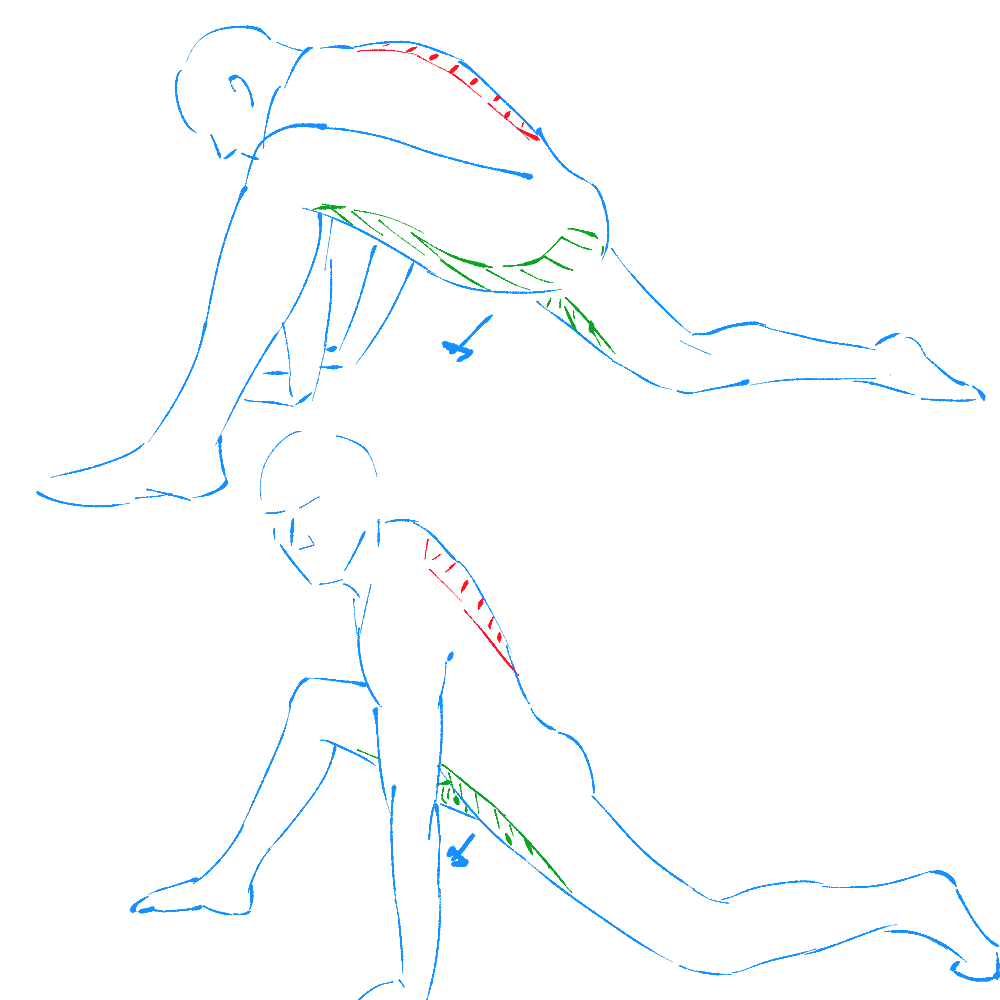
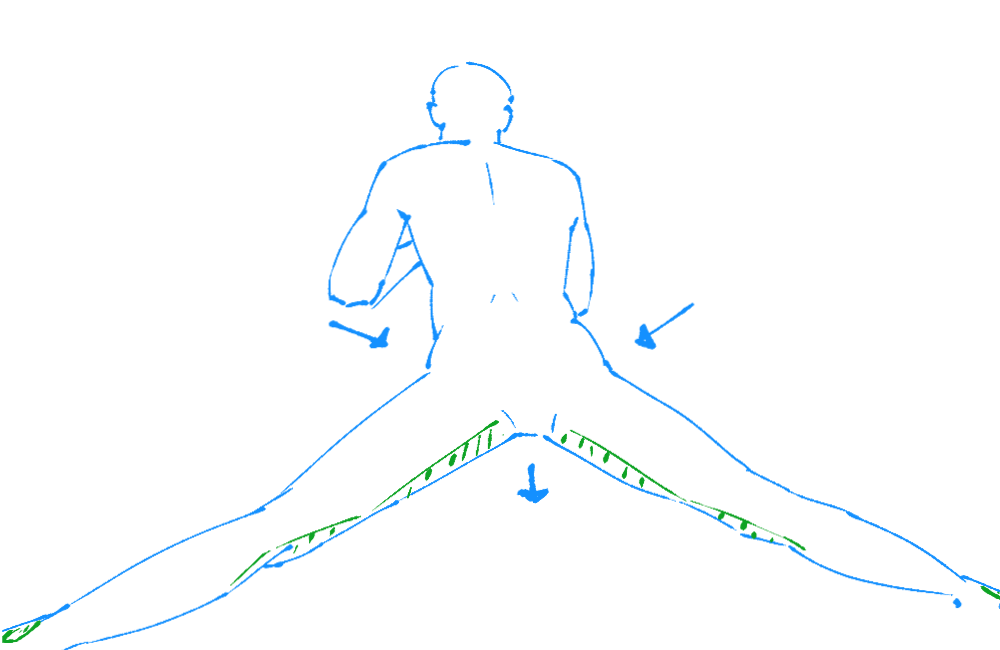
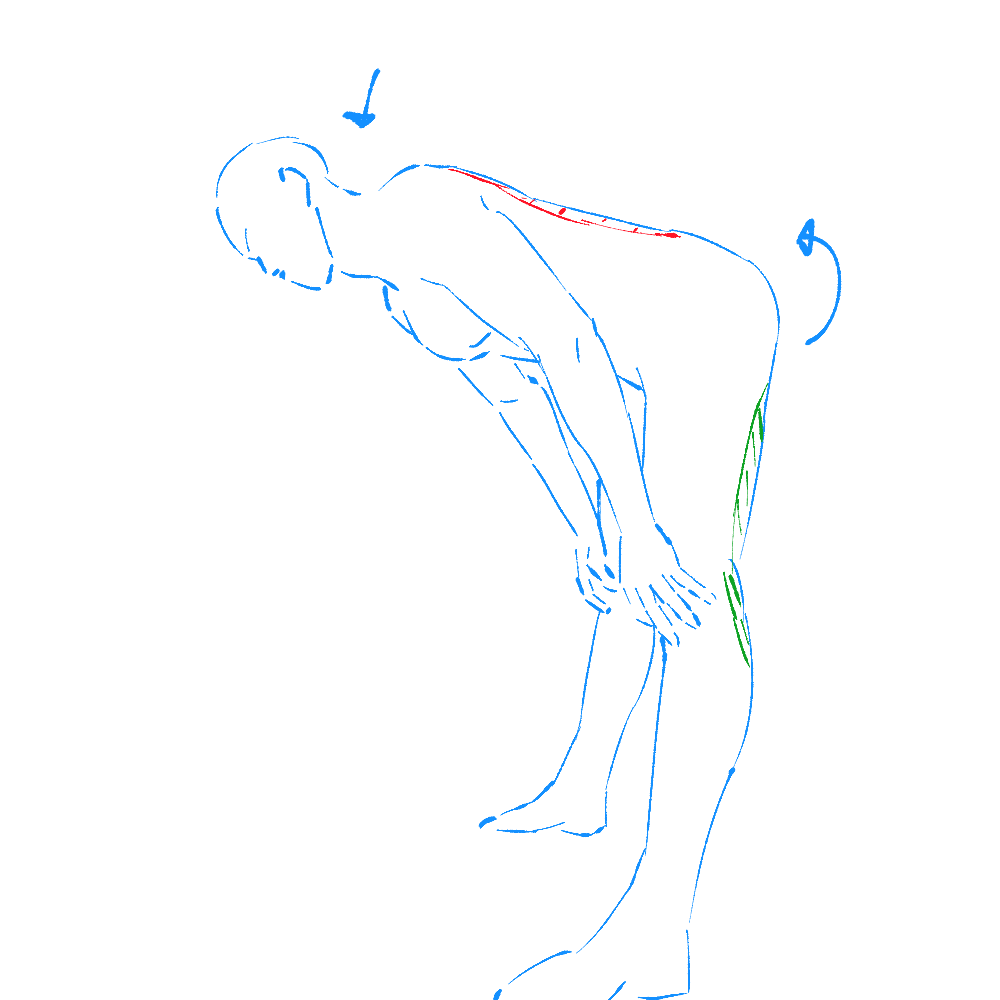
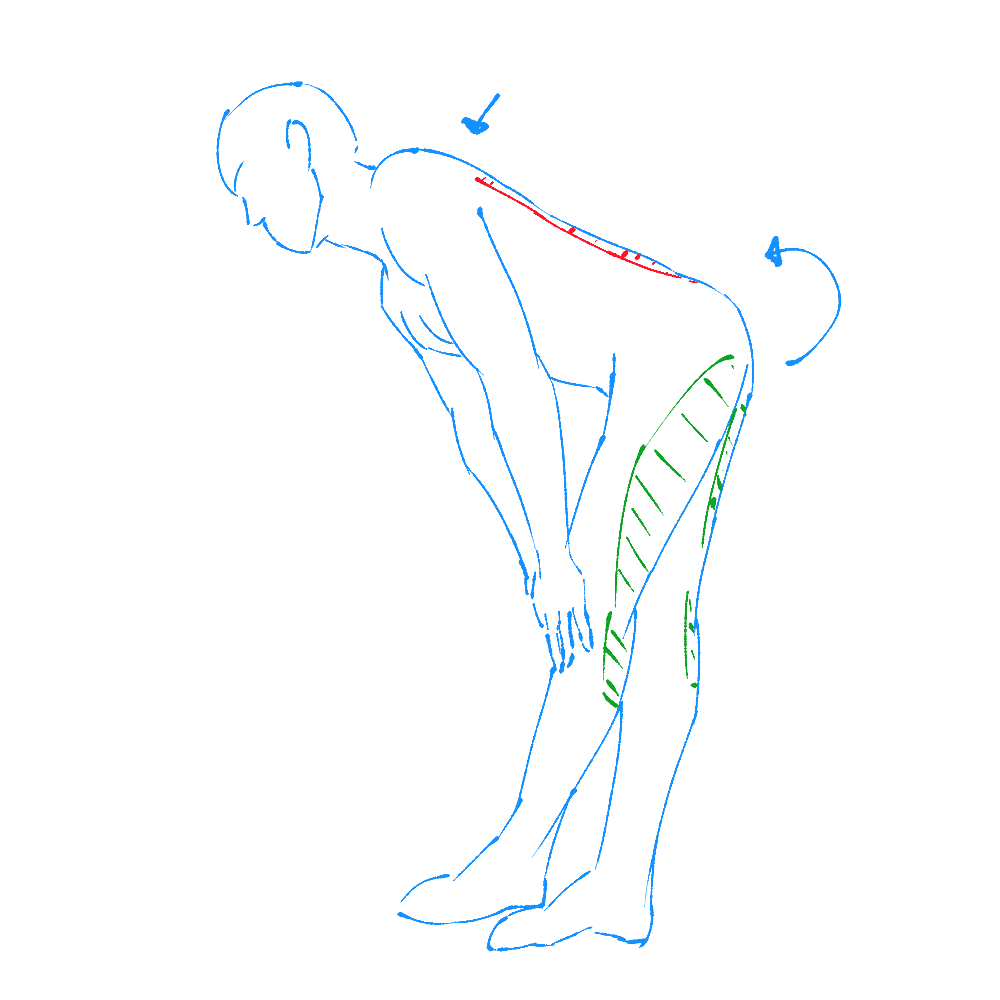
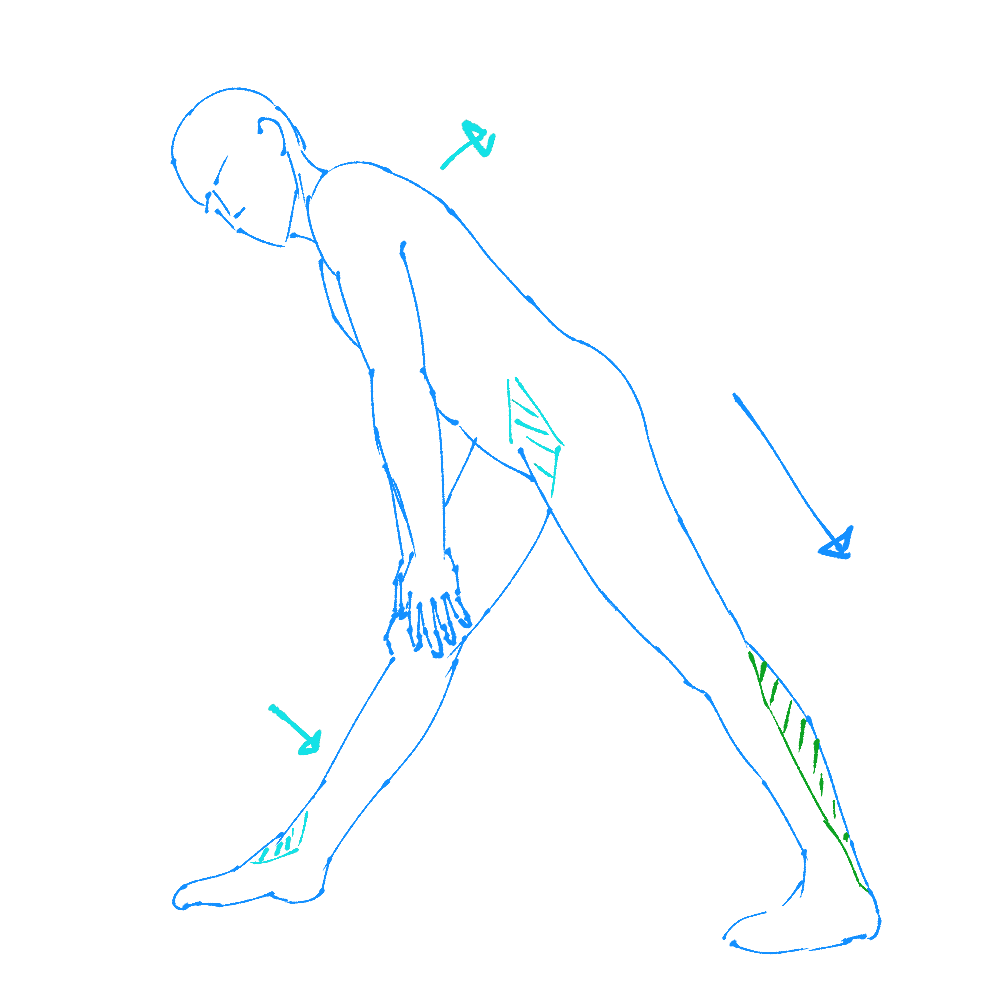
      <content type="html"><![CDATA[<p>Originally published on Cohost as a response to an ask, "What's your stretching routine, if you don't mind me asking?".</p><hr><p>Great question! TL;DR: deep lunges ~8min each as the main focus, with {side splits, wide stance bend-over, cross-legged bend-over, calf stretches, single-leg reaches} for ~2min each if I'm feeling up for more. If those words don't mean anything to you, keep reading! I made diagrams!</p><p><sup class=footnote-ref><a data-footnote-ref href=#fn-1 id=fnref-1>1</a></sup> My routine is very cobbled-together and unscientific. I took most of my inspiration from when my sister (who does ballet) led me through a shortened version of her routine. From that, I took mostly the ones I could do without much warmup and added in a few from sports practices. The end result is something targeted specifically to address imbalances from too much running and sitting. I haven't made much progress in flexibility in a while so ymmv, but I <em>can</em> touch my toes so it'll prob get u there at the very least.</p><p>Do note, however, that because of the nature of the things I want to stretch, these are all lower-body ones, no upper-body. So if you're looking for that, sorry, I need to figure out a better routine myself before giving any advice.</p><h2 id=heading-general-stretching-advice>General Stretching Advice<a aria-label="Link to heading 'General Stretching Advice'" data-heading-content="General Stretching Advice" class=anchor href=#general-stretching-advice></a></h2><p>Like with any physical activity, stretching is a conversation with your body! It is important to really pay attention to how things feel and back off if things start to hurt in bad ways. It is also important to learn to distinguish between "good hurting" and "bad hurting". It's hard for me to describe beyond that through text, sort of a "you know it when you feel it" sort of thing. "Good hurting" is like the soreness you get from a deep stretch or workout, "bad hurting" is when you injure yourself doing those things. It's sometimes a fine line in terms of what activities will cause what sensation, especially when pushing your limits, but the sensations themselves are very distinct I promise!!</p><h2 id=heading-deep-lunges>Deep Lunges<a aria-label="Link to heading 'Deep Lunges'" data-heading-content="Deep Lunges" class=anchor href=#deep-lunges></a></h2><p><img alt="deep lunge, hips toward the ground, keeping back flat, using one or both arms to brace" title="deep lunge, hips toward the ground, keeping back flat, using one or both arms to brace" src=https://static.wolfgirl.dev/9331ce3f-3b64-4c97-9035-33183f99d128/deep_lunge.png></p><p>Before getting into the rest of the stretches, I should probably explain something about the images I've included. In green, I've highlighted parts of my body that <em>should</em> be feeling the stretch, and in red, I've highlighted parts that <em>should not</em> be the focus of the stretch. In this case, we see that the <strong>hip flexors</strong> and <strong>upper hamstring/lower glute</strong> are the focus. The goal is eventually to get your elbows on the ground, but you should not be twisting or rounding your back too much in order to do so<sup class=footnote-ref><a data-footnote-ref href=#fn-2 id=fnref-2>2</a></sup>. I've also included arrows on the "direction" of the stretch, that is, what part of your body should be moving lower in order to make the stretch deeper. In this case, getting your hips closer to the ground is the goal.</p><p>These are my favorite stretch and I just love how my legs feel afterwards. I do it for the longest because the position is fairly stable, and I can really feel the muscles open up as time goes on. Something about the upper hamstring and especially the opening of the hip flexor just feels really nice... and boy howdy do my hip flexors need it from sitting all day<sup class=footnote-ref><a data-footnote-ref href=#fn-3 id=fnref-3>3</a></sup>.</p><h2 id=heading-side-splits>Side Splits<a aria-label="Link to heading 'Side Splits'" data-heading-content="Side Splits" class=anchor href=#side-splits></a></h2><p><img alt="side splits, using an object in front to brace arms" title="side splits, using an object in front to brace arms" src=https://static.wolfgirl.dev/9331ce3f-3b64-4c97-9035-33183f99d128/side_splits.png></p><p>I started doing this on a whim and I've actually seen the most improvement here! I've been able to move my feet a solid couple inches farther than when I started. These can be potentially dangerous because your full bodyweight is on the tendons in a way that is hard to back out of without activating those same tendons, creating a risk for tears. I always use my hands to push myself up first, and then slowly shuffle my feet together until I'm out of the stretch.</p><h2 id=heading-wide-stance-bend-over>Wide Stance Bend-Over<a aria-label="Link to heading 'Wide Stance Bend-Over'" data-heading-content="Wide Stance Bend-Over" class=anchor href=#wide-stance-bend-over></a></h2><p><img alt="standing, legs apart, straight legs, straight back, leaning over" title="standing, legs apart, straight legs, straight back, leaning over" src=https://static.wolfgirl.dev/9331ce3f-3b64-4c97-9035-33183f99d128/wide_bend_over.png></p><p>a.k.a "<a href=https://knowyourmeme.com/memes/jack-o-crouch-jack-o-challenge>The Jack-O Crouch</a>". As you can see pictured, I am not nearly as flexible as that character, but this is a good stretch regardless. The focus should definitely be on keeping your back <em>flat</em> throughout. The goal is to stretch your hamstrings here, not your upper back (a bit of lower back stretch is unavoidable). The mental image should be rotating your hips. If you're like me, and your hips aren't very flexible, you might be surprised at how little they can rotate! This is ok, and means you have lots of room for improvement. My eventual goal is go <a href=https://static.wolfgirl.dev/art/_2022-07-baseball.jpg>below 90 degrees</a> but oh boy my sitting legs r not up 2 task; my lower hamstrings are very tight.</p><h2 id=heading-cross-legged-bend-over>Cross-Legged Bend-Over<a aria-label="Link to heading 'Cross-Legged Bend-Over'" data-heading-content="Cross-Legged Bend-Over" class=anchor href=#cross-legged-bend-over></a></h2><p><img alt="standing, legs crossed, straight legs, straight back, bending over" title="standing, legs crossed, straight legs, straight back, bending over" src=https://static.wolfgirl.dev/9331ce3f-3b64-4c97-9035-33183f99d128/cross_bend_over.png></p><p>Variant of the previous stretch, targeting a different part of your hamstring than before. I'm not entirely sure myself if the stretch is more on the front crossed leg or the back, both are stretched, alternating between is probably fine. Remember to still keep your back flat! I usually don't go as low on these compared to the wide stance ones.</p><h2 id=heading-calf-stretches>Calf Stretches<a aria-label="Link to heading 'Calf Stretches'" data-heading-content="Calf Stretches" class=anchor href=#calf-stretches></a></h2><p><img alt="standing, one leg forward, and one leg back, leaning with back flat over the front leg, stretching the back leg" title="standing, one leg forward, and one leg back, leaning with back flat over the front leg, stretching the back leg" src=https://static.wolfgirl.dev/9331ce3f-3b64-4c97-9035-33183f99d128/calf.png></p><p>I got a mean calf cramp once, so this made it into my routine. I also usually combine these with a standing lunge (in cyan) to target hip flexors again, since they're basically the same foot position just with different hip rotations. The other cyan is an option to stretch the front of your opposite foot. Make sure to do these in shoes or on a sticky exercise mat so your feet don't slip!</p><h2 id=heading-single-leg-reaches>Single-Leg Reaches<a aria-label="Link to heading 'Single-Leg Reaches'" data-heading-content="Single-Leg Reaches" class=anchor href=#single-leg-reaches></a></h2><p>A classic, I think everyone had to do this in middle school for fitness tests or something?? Anyways this was the one fitness test i failed (: and I'm still working on it to this day. I usually do these flat with one leg butterfly-ed (as shown in <a href=https://static.wolfgirl.dev/art/_2021-06.png>this image</a> that I drew previously).</p><h2 id=heading-other-stretches-that-are-nice>Other Stretches That Are Nice<a aria-label="Link to heading 'Other Stretches That Are Nice'" data-heading-content="Other Stretches That Are Nice" class=anchor href=#other-stretches-that-are-nice></a></h2><p>... but I didn't have room to include since I don't do them too regularly and this post is as long enough as it is:</p><ul><li>Butterfly</li><li>Single-Leg Quad</li><li>Single-Leg Sits</li><li>World's Greatest</li><li>Front Split Reaches And more upper body ones that, again, I'm neglecting to mention.</li></ul><p>That's about it, now, go stretch!! & drink some water, it'll make u feel better!! Physicality affecting emotions is real, and stretching is a good meditative/mindfulness thing, for me at least. thank u for allowing me 2 share my niche interest :)</p><section class=footnotes data-footnotes><ol><li id=fn-1><p>I'll be honest: I did forget about this eventually. I had the draft, I had the photos, main hurdle was actually setting aside chunks of time to draw over the pictures and edit the draft. I forgot about it in the meantime multiple times. Sorry for the big delay on this, I'll try to be faster in responding to asks in the future! Asks are always open after all, and more asks about physical activities are always appreciated! <a aria-label="Back to reference 1" class=footnote-backref data-footnote-backref data-footnote-backref-idx=1 href=#fnref-1>↩</a></p></li><li id=fn-2><p>A little is fine, since that can change the stretch on your legs in ways that can help, but again, backs are not something that needs too much stretching. <a aria-label="Back to reference 2" class=footnote-backref data-footnote-backref data-footnote-backref-idx=2 href=#fnref-2>↩</a></p></li><li id=fn-3><p>Stretching theory time! If your lower back hurts from too much sitting, that tends to be a problem with your <strong>hip flexors</strong> being too tight, rotating your pelvis forward. So, my first stretch targets this hip flexibility a lot, and I throw in lower hamstring flexibility as other stretches to round things out. <a aria-label="Back to reference 3" class=footnote-backref data-footnote-backref data-footnote-backref-idx=3 href=#fnref-3>↩</a></p></li></ol></section>]]></content>
      <author>
        <name>PolyWolf</name>
        <uri>https://wolf.girl.technology/</uri>
      </author>
    </entry>
  
    <entry>
      <title><![CDATA[Software Packaging Is A Nightmare]]></title>
      <link rel="alternate" href="https://wolfgirl.dev/blog/2613009/" />
      <id>https://wolfgirl.dev/blog/2613009/</id>
      <published>2023-09-24T23:23:42Z</published>
      <updated>2023-09-24T23:23:42Z</updated>
      
      <content type="html"><![CDATA[<p>Originally published on Cohost. I recall this one getting a fair amount of attention, which felt good because I put a fair amount of time into it.</p><hr><p>Recently, a friend shared <a href=https://gist.github.com/terabyte/15a2d3d407285b8b5a0a7964dd6283b0>this gist about how Amazon's internal buildsystem works</a>, and wow did that unlock some Opinions for me about software packaging.</p><p>Supposedly, Amazon's buildsystem "Brazil" works a little bit like <a href=https://nix.dev/tutorials/first-steps/>Nix</a>/<a href=https://nixos.org/manual/nixpkgs/stable/>NixPkgs</a><sup class=footnote-ref><a data-footnote-ref href=#fn-12 id=fnref-12>1</a></sup>, in that it has entirely reproducible builds based on package declarations of nearly every package in existence. But instead of just being able to choose a single snapshot of package versions<sup class=footnote-ref><a data-footnote-ref href=#fn-1 id=fnref-1>2</a></sup>, you can also pin to <a href=https://semver.org/>semver</a> of a set of packages, whose mutual compatibility is automatically enforced via unit tests when creating a new immutable build, so you always have the latest updates. This is <em>amazing</em>. Also like Nix, you can have:</p><ul><li>Two versions of a package installed on your system, since different environments just choose which version they want</li><li>Local overrides of packages for development/debugging environments</li><li>Binary releases since everything is reproducible</li></ul><p>And it all "just works"! My friend who currently works there says he loves it and building software has never been easier. Which is wild, given that:</p><blockquote><p>The main build driver is a mess 'o Perl scripts that generates Makefiles. The build system is bootstrapped by a minimal Perl script which assumes only base Perl deps and GCC are available, and downloads all other dependencies.</p></blockquote><p>...but hey, if it works, it works!</p><h1 id=heading-most-software-isnt-like-this>Most Software Isn't Like This<a aria-label="Link to heading 'Most Software Isn't Like This'" data-heading-content="Most Software Isn't Like This" class=anchor href=#most-software-isnt-like-this></a></h1><p>First, some terminology, so that it's unambiguous what I'm talking about:</p><ul><li><strong>Package</strong>: The atomic unit of software. Libraries, applications, etc. Each package has an: <ul><li><strong>Interface version</strong>: Some identifier for other software to know a package supports certain capabilities. Hopefully, specified in some <a href=https://semver.org/>semver</a>-compatible way, although in practice lol lmao. Adding extra debug logging or fixing security bugs that no legitimate consumer would be affected by won't change an interface version.</li><li><strong>Build version</strong>: Some identifier that can be 1-to-1 correlated with differences in the produced binary<sup class=footnote-ref><a data-footnote-ref href=#fn-8 id=fnref-8>3</a></sup> for a package. This lets you distinguish between "the library i built with extra logging and a patch for the vuln" and "the library without those things". Also accounts for differences in build versions of dependencies!</li></ul></li><li><strong>Dependency</strong>: a package that another package requires to build and/or run. Often specified with interface versions, but can also be specified against a build version.</li><li><strong>Version Set</strong>: A collection of build versions of packages known to work well together. It's important that <em>build versions</em> work well together and not <em>interface versions</em>, because it is very possible to mess up semver.</li><li><strong>Environment</strong>: For a specific package you want to use, the set of all other packages that are capable of affecting it.</li></ul><p>As far as I am aware, there are two common methods for distributing software packages and creating environments to run them in. These aren't the <em>only</em> methods in existence, and not everything can be categorized exactly, but they are archetypical.</p><h2 id=heading-share-everything>Share Everything<a aria-label="Link to heading 'Share Everything'" data-heading-content="Share Everything" class=anchor href=#share-everything></a></h2><ul><li>There is one central version set, containing every package, often with testing that they all work together.</li><li>Only one build version per package can be installed at any given time. If you want to have different build versions at the same time, you need to create different packages or create package aliases.</li></ul><p>This is a <em>classic</em> model for software environments. <a href=https://archlinux.org/>Arch Linux</a>, <a href=https://www.redhat.com/en/technologies/linux-platforms/enterprise-linux>RHEL</a>, <a href=https://docs.python.org/3/installing/index.html>pip</a>, <a href=https://www.npmjs.com/>npm</a>, <a href=https://brew.sh/>Homebrew</a>, <a href=https://files.minecraftforge.net/net/minecraftforge/forge/>Forge</a>, if you can point at it and say "that's a Package Manager", it likely uses this model. There are differences in how often upgrades are released, how exactly semver pinning works, other jobs the package manager takes care of, but all of the examples I listed share these key traits<sup class=footnote-ref><a data-footnote-ref href=#fn-2 id=fnref-2>4</a></sup>.</p><p>Now, frankly, I think this model sucks big booty balls, pardon my language. Only being able to have <em>one</em> (1) version of a package officially installed is extremely limiting. Your package needs a build version of a dependency not in the central version set? Your options are to:</p><ol><li>Rename the dependency and install it globally.</li><li>"Install" the dependency outside the control of the package manager.</li><li>Give Up</li></ol><p>Option 1 is dumb because suddenly you are specifying interface/build versions as part of the package name, when it is literally the package manager's job to distinguish between these. Option 2 is dumb because suddenly you're rolling your own package manager with <code>CMakeLists.txt</code> and shell scripts when you have a perfectly good package manager right there<sup class=footnote-ref><a data-footnote-ref href=#fn-6 id=fnref-6>5</a></sup>. Option 3 is dumb because Winners Never Quit 😤</p><p>Sometimes, it's OK for packages to just live in their own little island of dependencies! Not everything needs to be global! It's frankly unacceptable that local installs are so poorly supported! However, it's possible to go too far the other way. Instead of sharing everything, you can instead:</p><h2 id=heading-share-nothing>Share Nothing<a aria-label="Link to heading 'Share Nothing'" data-heading-content="Share Nothing" class=anchor href=#share-nothing></a></h2><p>If a package has dependencies, it will need to include its own way of putting them in its environment. There are ways for packages installed separately to be part of the same environment, but absent a package manager, these methods are rickety and best<sup class=footnote-ref><a data-footnote-ref href=#fn-3 id=fnref-3>6</a></sup> and infuriatingly buggy at worst. <em>Curiously enough</em>, consumer-grade operating systems like Windows and MacOS have this as their default approach. <em>Even more curiously</em>, a semi-recent push towards containerization technologies like <a href=https://www.docker.com/>Docker</a>, <a href=https://snapcraft.io/>snap</a>, <a href=https://www.flatpak.org/>flatpak</a>, and others have been pushing Linux software to be also distributed using this model. Why is this?</p><p>I hypothesize this model's popularity comes from the fact it is more likely to produce consistently working software. Linux distributions have been plagued by "works on my machine" or "works on my distro" problems for, like, ever. Share Everything, when you're trying to build packages outside the global version set, against different global version sets from different distros, or even the same distro as it evolves over time, is just <em>begging</em> to have frustrating build problems. <em>This</em> is why language-specific package managers with virtual environments feel like such an upgrade, <em>this</em> is why Docker is so popular. Your global environment has ghosts in it, invisible dependencies that haunt your build process, so isolating <em>everything</em> to trap the ghosts has its benefits for reproducibility.</p><p>Now, to be clear, the Share Nothing approach is not without its drawbacks. Requiring packages to bundle all their dependencies/exist within an isolated Share Everything fiefdom leads to a ton of bloat. I don't particularly <em>want</em> 5 copies of Tensorflow and PyTorch on my machine, but since I also don't want to try to shove all my one-off AI projects into a global Python environment, this is what I get stuck with.</p><h2 id=heading-what-the-approaches-are-missing>What The Approaches Are Missing<a aria-label="Link to heading 'What The Approaches Are Missing'" data-heading-content="What The Approaches Are Missing" class=anchor href=#what-the-approaches-are-missing></a></h2><p>Let's lay out our <strong><em>Ideal Build System Requirements</em></strong> again:</p><ul><li>Reproducible builds: if a remote system can build it, your local system can too</li><li>Local overrides: not only can you build the package locally, you can swap it out for anything expecting that package</li><li>Remotely hosted binary releases: because you <em>deserve</em> to not have your fans take off and your disk explode every time you want to install some software</li><li>No global version set: you can have more than one version (major, minor, patch all included) of a package installed on your system, and things just don't care, since they use the one they were reproducibly built for</li><li>Semver <em>and</em> hash pinning: to enable dependency sharing if supported, but also for exact reproducibility if needed</li></ul><p>hm. Neither approach we've covered gets this right, or even comes close to doing all these<sup class=footnote-ref><a data-footnote-ref href=#fn-5 id=fnref-5>7</a></sup>! There are <strong>fundamental flaws in the way software packages are currently distributed</strong> that prevents these goals from being achievable.</p><h1 id=heading-boiling-the-ocean>Boiling The Ocean<a aria-label="Link to heading 'Boiling The Ocean'" data-heading-content="Boiling The Ocean" class=anchor href=#boiling-the-ocean></a></h1><p>Now that we have a better understanding of what Share Everything and Share Nothing lack, we can appreciate why Amazon's Brazil is such an achievement. <em>Not only</em> does it let you isolate packages to only see their dependencies so everything is reproducible, it <em>also</em> lets packages share dependencies that provide the same interface version! Awesome! But what does it take to accomplish this, exactly?</p><h2 id=heading-technical-challenges>Technical Challenges<a aria-label="Link to heading 'Technical Challenges'" data-heading-content="Technical Challenges" class=anchor href=#technical-challenges></a></h2><p>Not going to go too in-depth here (this post is long enough as it is LOL), but somewhat unsurprisingly, there aren't any compelling technical reasons we can't have this. Environment isolation at all levels has gotten quite good on the major OSes; why isn't that enough?</p><h2 id=heading-social-challenges>Social Challenges<a aria-label="Link to heading 'Social Challenges'" data-heading-content="Social Challenges" class=anchor href=#social-challenges></a></h2><p>It's not that the technology doesn't exist, it's just that, <strong><em>no one has cared enough to put it into practice</em></strong>. "Why should <em>I</em> change how <em>I</em> build software", say the developers, the distro creators, "it works well enough for <em>my</em> use cases!".</p><p>Personally, I have built many pieces of software in environments just a teensy bit different from where they were supposed to be built, and have seen how bad it is. Every package is different, with its own magic incantations of scripts and command line flags and environment variables and build directories to get them working. As one commenter on the Brazil gist puts it:</p><blockquote><p>One major issue, in my experience, is the Brazil packaging concept doesn't have critical mass or would require boiling the ocean to get there. At Amazon, there's one package manager - Brazil. You want a Gem, NPM package, *.so, or JAR dependency? You add it to Brazil. Sometimes you go through great pain to add it to Brazil (especially when importing a new build system). But once the package is there, everything just works.</p></blockquote><p>Only nerds with obscene amounts of time on their hands have the ability to create an ecosystem. Package maintainers for Gentoo, NixPkgs, Guix, AUR, each take up their own divine hammers and bend the universe of software to their will. Everything "just works" when you're in the system, but for those of us unlucky enough to be developing software outside of it, we're living in an unending nightmare, where nothing works and everything is hard and no one has enough spare for a <a href=https://xkcd.com/927/>15th standard</a><sup class=footnote-ref><a data-footnote-ref href=#fn-13 id=fnref-13>8</a></sup> because we're just trying to build our silly little packages gosh darn it.</p><h2 id=heading-what-amazon-does>What Amazon Does<a aria-label="Link to heading 'What Amazon Does'" data-heading-content="What Amazon Does" class=anchor href=#what-amazon-does></a></h2><p>In a nutshell, they throw money at the problem. Money for compute, to build <em>every single transitive dependent</em> when a package is published to make sure the listed interface version is semver-compliant. Money for storage, to host the entire history of software (source and binaries) so no deploys can possibly fail by missing old build versions. And most importantly, money for developers to port all software they want to use to this buildsystem.</p><p>This approach really only works for companies like Amazon, since the reward for them is in fact worth the cost. But what about the rest of us?</p><h2 id=heading-can-we-have-this-too>Can We Have This Too?<a aria-label="Link to heading 'Can We Have This Too?'" data-heading-content="Can We Have This Too?" class=anchor href=#can-we-have-this-too></a></h2><p>I don't know, honestly. In my uninformed opinion, I'd probably say that NixPkgs and Guix are the closest things to what I've laid out, hitting all my Ideal Build System Requirements minus ones that are impossible thanks to No Money (semver pinning, total history<sup class=footnote-ref><a data-footnote-ref href=#fn-10 id=fnref-10>9</a></sup>). I have not used either extensively enough to judge the UX fully<sup class=footnote-ref><a data-footnote-ref href=#fn-9 id=fnref-9>10</a></sup>, though I will say I have heard terrible things about NixPkgs<sup class=footnote-ref><a data-footnote-ref href=#fn-11 id=fnref-11>11</a></sup> and nothing about Guix, neither of which is a good sign.</p><p>As an individual, it is not worth it for me to boil the ocean. I've gotten used to living in the nightmare, holding my Windows development environment together with duct tape & superglue, so I don't think I'll be making the switch any time soon. However, it takes a community to boil the ocean, so maybe now that my Arch install has collapsed in on itself, my next Linux install will be a reproducible one. I can only hope others feel the same.</p><section class=footnotes data-footnotes><ol><li id=fn-12><p>For a great explanation of the differences between these, see <a href=https://www.haskellforall.com/2022/08/stop-calling-everything-nix.html>this excellent blog post</a> by @fullmoon <a aria-label="Back to reference 1" class=footnote-backref data-footnote-backref data-footnote-backref-idx=1 href=#fnref-12>↩</a></p></li><li id=fn-1><p>I don't actually know Nix that well, this was just my impression based on limited use + doc reading, please correct me on this point if I'm wrong! <a aria-label="Back to reference 2" class=footnote-backref data-footnote-backref data-footnote-backref-idx=2 href=#fnref-1>↩</a></p></li><li id=fn-8><p>"What about source-only languages??" the source is a form of binary :) <a aria-label="Back to reference 3" class=footnote-backref data-footnote-backref data-footnote-backref-idx=3 href=#fnref-8>↩</a></p></li><li id=fn-2><p>I think? Reasonable people could disagree on some aspects, maybe i am generalizing too hard but u tell me <a aria-label="Back to reference 4" class=footnote-backref data-footnote-backref data-footnote-backref-idx=4 href=#fnref-2>↩</a></p></li><li id=fn-6><p>Now to be fair, a lot of language-specific package managers <em>do</em> support having "local installs" of packages that read from a specific directory instead of from a repository. This is more a dig at the worst languages for packaging, C and C++, but still applies for how you get other languages' custom packages into local directories in the first place. <a aria-label="Back to reference 5" class=footnote-backref data-footnote-backref data-footnote-backref-idx=5 href=#fnref-6>↩</a></p></li><li id=fn-3><p>On Windows, you can put your .dll or .exe into the global <code>PATH</code> for other packages to access it<sup class=footnote-ref><a data-footnote-ref href=#fn-7 id=fnref-7>12</a></sup>, but this has the drawback of "oh shoot I'm using the wrong version of python.exe again, better reorder my <code>PATH</code>", so usually it's just best practice to put all the .dlls a package will need in the same folder. if you forget this best practice, your app runs with elevated privileges, and the <code>PATH</code> can somehow contain a user-writable folder, <a href=https://stackoverflow.com/questions/3623490/what-is-dll-hijacking>oops! DLL hijacking</a>. I think MacOS works similarly, but with better sandboxing in certain areas (so package files are only accessible by the package itself really, i think it is still susceptible forms of dll hijacking). for docker, u share dependencies through exposing network ports or shared folders, which, lol lmao. <a aria-label="Back to reference 6" class=footnote-backref data-footnote-backref data-footnote-backref-idx=6 href=#fnref-3>↩</a></p></li><li id=fn-5><p>Honestly? I believe that Cargo, the build system for Rust packages, comes the closest! Unfortunately the constraints of the language make binary releases nearly impossible (generics), and semver a thing only for source distributions. Plus, unless you're <a href=https://github.com/tosc-rs/mnemos>a madwoman</a>, Cargo isn't really suited for non-Rust packages. <a aria-label="Back to reference 7" class=footnote-backref data-footnote-backref data-footnote-backref-idx=7 href=#fnref-5>↩</a></p></li><li id=fn-13><p>It's also a hurdle that proprietary software won't adopt a model like this unless it is <em>the</em> standard, so anything that tries will have to bend over backwards for proprietary software, even more than for weird build scripts. But I digress, since this is ALREADY TOO LONG <a aria-label="Back to reference 8" class=footnote-backref data-footnote-backref data-footnote-backref-idx=8 href=#fnref-13>↩</a></p></li><li id=fn-10><p>https://hachyderm.io/@fasterthanlime/111103916027416609 <a aria-label="Back to reference 9" class=footnote-backref data-footnote-backref data-footnote-backref-idx=9 href=#fnref-10>↩</a></p></li><li id=fn-9><p>And when I did give it a little whirl, it promptly ate up all 72GB of my free disk space, which is maybe on me, but also, that's a lot of disk space!! so i haven't used it since. <a aria-label="Back to reference 10" class=footnote-backref data-footnote-backref data-footnote-backref-idx=10 href=#fnref-9>↩</a></p></li><li id=fn-11><p>https://blog.wesleyac.com/posts/the-curse-of-nixos , among others <a aria-label="Back to reference 11" class=footnote-backref data-footnote-backref data-footnote-backref-idx=11 href=#fnref-11>↩</a></p></li><li id=fn-7><p>Another thing you can do is register a different global environment variable just for your package, and then anyone looking for your package can simply read from that environment variable. For Docker, <code>s/environment variable/network port/g</code>. Like I said, rickety at best, infuriatingly buggy at worst :P <a aria-label="Back to reference 12" class=footnote-backref data-footnote-backref data-footnote-backref-idx=12 href=#fnref-7>↩</a></p></li></ol></section>]]></content>
      <author>
        <name>PolyWolf</name>
        <uri>https://wolf.girl.technology/</uri>
      </author>
    </entry>
  
    <entry>
      <title><![CDATA[Learning Memory Order in C With Mutexes]]></title>
      <link rel="alternate" href="https://wolfgirl.dev/blog/2091838/" />
      <id>https://wolfgirl.dev/blog/2091838/</id>
      <published>2023-08-10T01:13:59Z</published>
      <updated>2023-08-10T01:13:59Z</updated>
      <summary><![CDATA[In which I (hopefully simply) explain C11's memory orderings using mutexes as a motivating example.]]></summary>
      <content type="html"><![CDATA[<p>Originally published on Cohost.</p><hr><p>oh wow i have been mega procrastinating on this. <a href=/blog/2064554/>read this first btw</a></p><h2 id=heading-lets-talk-about-volatile>Let's Talk About <code>volatile</code><a aria-label="Link to heading 'Let's Talk About volatile'" data-heading-content="Let's Talk About volatile" class=anchor href=#lets-talk-about-volatile></a></h2><p>So. <code>volatile</code>. The embedded programmer's best friend. But what does it actually mean?</p><p>From <a href=https://en.cppreference.com/w/c/language/volatile>cppreference</a>, emphasis mine:</p><blockquote><p>Every access (both read and write) made through an lvalue expression of volatile-qualified type is considered an observable side effect for the purpose of optimization and is evaluated strictly according to the rules of the abstract machine (that is, all writes are completed at some time before the next sequence point). This means that within <strong>a single thread of execution</strong>, a volatile access cannot be optimized out or reordered <strong>relative to another visible side effect</strong> that is separated by a sequence point from the volatile access.</p></blockquote><p>More simply, volatile reads and writes need to happen in the same order as you wrote them down in, but only with respect to "observable side effects" like syscalls or other volatile accesses.</p><p>So if you tried to use a standard <code>volatile int</code> for a mutex (ignoring the race condition and only focusing on a single thread):</p><pre class=syntax-highlighting><code class=language-c><span class=type>void</span> <span class=function>lock</span>(<span class=keyword>volatile</span> <span class=type>int</span><span class=operator>*</span> <span class=variable>m</span>) {
  <span class=type>int</span> <span class=variable>old_m</span> <span class=operator>=</span> <span class=number>1</span>;
  <span class=keyword>while</span> (<span class=variable>old_m</span>) {
    <span class=variable>old_m</span> <span class=operator>=</span> <span class=operator>*</span><span class=variable>m</span>;
    <span class=operator>*</span><span class=variable>m</span> <span class=operator>=</span> <span class=number>1</span>;
  }
}

<span class=type>void</span> <span class=function>unlock</span>(<span class=keyword>volatile</span> <span class=type>int</span><span class=operator>*</span> <span class=variable>m</span>) {
  <span class=operator>*</span><span class=variable>m</span> <span class=operator>=</span> <span class=number>0</span>;
}

<span class=type>void</span> <span class=function>do_stuff</span>(<span class=keyword>volatile</span> <span class=type>int</span><span class=operator>*</span> <span class=variable>m</span>, <span class=type>int</span><span class=operator>*</span> <span class=variable>shared</span>) {
  <span class=function>lock</span>(<span class=variable>m</span>);
  <span class=operator>*</span><span class=variable>shared</span> <span class=operator>=</span> <span class=number>5</span>;
  <span class=function>unlock</span>(<span class=variable>m</span>);
}</code></pre><p>Then, because the store to <code>shared</code> is non-volatile, it is not considered an observable side-effect, and can be freely reordered outside the critical section. You may then think "oh I'll just make everything inside the critical region volatile too!" but (1) this severely limits the optimizations compilers can do (those babies <em>love</em> to reorder stuff) and (2) that's not even the whole problem here. Remember, <code>volatile</code> only gives guarantees about single-threaded programs, and says nothing about multi-threaded ones.</p><details><summary>Note about the race condition:</summary> The swap of <code>old_m</code> and <code>*m</code> in the while loop isn't atomic, so an appropriate interleaving of two threads calling <code>lock()</code> could both enter the critical section, breaking mutual exclusion.</details><h2 id=heading-data-races>Data Races<a aria-label="Link to heading 'Data Races'" data-heading-content="Data Races" class=anchor href=#data-races></a></h2><p>What is a data race? Since we're using C, we can check <a href=https://www.open-std.org/jtc1/sc22/wg14/www/docs/n2310.pdf>the C standard</a>, section 5.1.2.4. Paragraph 4 says (emphasis theirs):</p><blockquote><p>Two expression evaluations <em>conflict</em> if one of them modifies a memory location and the other one reads or modifies the same memory location.</p></blockquote><p>and Paragraph 35 says:</p><blockquote><p>The execution of a program contains a <em>data race</em> if it contains two conflicting actions in different threads, at least one of which is not atomic, and neither happens before the other. Any such data race results in undefined behavior.</p></blockquote><p>(where "before" is precisely defined in the other paragraphs).</p><p>With this in mind, let's take a look at my first attempt at the ticket lock implementation:</p><pre class=syntax-highlighting><code class=language-c><span class=keyword>#include</span> <span class=string>&lt;stdatomic.h></span>

<span class=keyword>typedef</span> <span class=keyword>struct</span> {
  <span class=type>atomic_int</span> <span class=property>next_ticket</span>;
  <span class=type>int</span> <span class=property>now_serving</span>;
} <span class=type>mutex_t</span>;

<span class=type>void</span> <span class=function>lock</span>(<span class=type>mutex_t</span> <span class=operator>*</span><span class=variable>m</span>) {
  <span class=type>int</span> <span class=variable>ticket</span> <span class=operator>=</span> <span class=function>atomic_fetch_add_explicit</span>(<span class=operator>&</span><span class=variable>m</span><span class=operator>-></span><span class=property>next_ticket</span>, <span class=number>1</span>, <span class=variable>memory_order_relaxed</span>);
  <span class=keyword>while</span> (<span class=variable>ticket</span> <span class=operator>!=</span> <span class=variable>m</span><span class=operator>-></span><span class=property>now_serving</span>) {}
}

<span class=type>void</span> <span class=function>unlock</span>(<span class=type>mutex_t</span> <span class=operator>*</span><span class=variable>m</span>) {
  <span class=operator>++</span><span class=variable>m</span><span class=operator>-></span><span class=property>now_serving</span>;
}</code></pre><p>Assume all uses of this API are correct (i.e. <code>lock()</code> always called before <code>unlock()</code>, no double-locking, and no double-unlocking within a thread). Can you spot the data race?</p><details><summary>(click for answer)</summary> That's right! <code>m->now_serving</code> is written to in <code>unlock()</code> and read from in <code>lock()</code> at the same time, and neither operation is atomic. If we assume that the compiler is not that smart and diligently translates our code into the assembly in the way we'd expect, then this works out fine: write before read means you see the write immediately, read before write is fine since we'll get it on the next iteration. But the compiler reasons that in the while loop, the value either <em>can</em> change (data race UB, since the loop is empty and there are no atomic updates in our program), or the value never changes (infinite loop UB. yes, certain non-terminating programs are UB) and can shoot our foot with whatever gun it likes.</details><p>Not to be deterred, I quickly fixed it:</p><pre class=syntax-highlighting><code class=language-c><span class=keyword>#include</span> <span class=string>&lt;stdatomic.h></span>

<span class=keyword>typedef</span> <span class=keyword>struct</span> {
  <span class=type>atomic_int</span> <span class=property>next_ticket</span>;
  <span class=type>atomic_int</span> <span class=property>now_serving</span>;
} <span class=type>mutex_t</span>;

<span class=type>void</span> <span class=function>lock</span>(<span class=type>mutex_t</span> <span class=operator>*</span><span class=variable>m</span>) {
  <span class=type>int</span> <span class=variable>ticket</span> <span class=operator>=</span> <span class=function>atomic_fetch_add_explicit</span>(<span class=operator>&</span><span class=variable>m</span><span class=operator>-></span><span class=property>next_ticket</span>, <span class=number>1</span>, <span class=variable>memory_order_relaxed</span>);
  <span class=keyword>while</span> (<span class=variable>ticket</span> <span class=operator>!=</span> <span class=variable>m</span><span class=operator>-></span><span class=property>now_serving</span>) {}
}

<span class=type>void</span> <span class=function>unlock</span>(<span class=type>mutex_t</span> <span class=operator>*</span><span class=variable>m</span>) {
  <span class=function>atomic_fetch_add_explicit</span>(<span class=operator>&</span><span class=variable>m</span><span class=operator>-></span><span class=property>now_serving</span>, <span class=number>1</span>, <span class=variable>memory_order_relaxed</span>);
}</code></pre><p>Great! Now that one of the updates is atomic, we've fixed the UB! That means we're done, right?</p><h2 id=heading-memory-ordering>Memory Ordering<a aria-label="Link to heading 'Memory Ordering'" data-heading-content="Memory Ordering" class=anchor href=#memory-ordering></a></h2><p>Not so fast! So far, we've just been setting the memory ordering parameter to the atomic operations to <code>memory_order_relaxed</code>, since that's the most flexible for the compiler<sup class=footnote-ref><a data-footnote-ref href=#fn-1 id=fnref-1>1</a></sup> and we only need atomic updates on individual variables to prevent data races.</p><p>However! Just like with <code>volatile</code>, C compilers are very aggressive about inlining functions and reordering load and stores, and since <code>memory_order_relaxed</code> doesn't impose any constraints on how the non-atomic loads and stores are sequenced, the compiler is still free to do whatever it wants. We're building a mutex after all, so it doesn't count if all we do is ensure the <code>lock()</code> and <code>unlock()</code> functions are race-free; we also need to make sure operations done in the critical section can't get reordered outside the <code>lock()</code> and <code>unlock()</code> calls.</p><p>Looking at the appropriate <a href=https://en.cppreference.com/w/c/atomic/memory_order>cppreference page</a> for other <code>memory_order</code> options, we see a couple that look interesting:</p><blockquote><p><code>memory_order_acquire</code>: A load operation with this memory order performs the acquire operation on the affected memory location: no reads or writes in the current thread can be reordered before this load. All writes in other threads that release the same atomic variable are visible in the current thread (see <a href=https://en.cppreference.com/w/c/atomic/memory_order#Release-Acquire_ordering>Release-Acquire</a> ordering)</p></blockquote><blockquote><p><code>memory_order_release</code>: A store operation with this memory order performs the release operation: no reads or writes in the current thread can be reordered after this store. All writes in the current thread are visible in other threads that acquire the same atomic variable (see <a href=https://en.cppreference.com/w/c/atomic/memory_order#Release-Acquire_ordering>Release-Acquire</a> ordering)</p></blockquote><p>Hey wait a minute, those names are familiar! "Acquire" is a fancy name for <code>lock()</code> and "release" is a fancy name for <code>unlock()</code>. These are memory orderings <em>specifically made for mutexes</em>; "reads or writes in the current threads" applies to <em>all</em> reads or writes, not just <code>volatile</code> ones. <code>memory_order_acquire</code> makes it so nothing in the critical section can be ordered before a <code>lock()</code>, and <code>memory_order_release</code> makes it so nothing in the critical section can be ordered after an <code>unlock()</code>. Perfect! With this in mind, we can write our final, correct<sup class=footnote-ref><a data-footnote-ref href=#fn-2 id=fnref-2>2</a></sup> ticket lock implementation:</p><pre class=syntax-highlighting><code class=language-c><span class=keyword>#include</span> <span class=string>&lt;stdatomic.h></span>

<span class=keyword>typedef</span> <span class=keyword>struct</span> {
  <span class=type>atomic_int</span> <span class=property>next_ticket</span>;
  <span class=type>atomic_int</span> <span class=property>now_serving</span>;
} <span class=type>mutex_t</span>;

<span class=type>void</span> <span class=function>lock</span>(<span class=type>mutex_t</span> <span class=operator>*</span><span class=variable>m</span>) {
  <span class=type>int</span> <span class=variable>ticket</span> <span class=operator>=</span> <span class=function>atomic_fetch_add_explicit</span>(<span class=operator>&</span><span class=variable>m</span><span class=operator>-></span><span class=property>next_ticket</span>, <span class=number>1</span>, <span class=variable>memory_order_relaxed</span>);
  <span class=keyword>while</span> (<span class=variable>ticket</span> <span class=operator>!=</span> <span class=variable>m</span><span class=operator>-></span><span class=property>now_serving</span>) {}
  <span class=function>atomic_thread_fence</span>(<span class=variable>memory_order_acquire</span>);
}

<span class=type>void</span> <span class=function>unlock</span>(<span class=type>mutex_t</span> <span class=operator>*</span><span class=variable>m</span>) {
  <span class=function>atomic_fetch_add_explicit</span>(<span class=operator>&</span><span class=variable>m</span><span class=operator>-></span><span class=property>now_serving</span>, <span class=number>1</span>, <span class=variable>memory_order_release</span>);
}</code></pre><p>Memory ordering is a super deep field, and I re-learn a lot of it every time I need to use it. Leaving u with one fun thing before I go, read about the <a href=https://www.cs.umd.edu/~pugh/java/memoryModel/AlphaReordering.html>DEC Alpha</a>. It's real cursed :3 <a href=https://en.wikipedia.org/wiki/Consistency_model#Relaxing_read_and_read_to_write_program_orders:_Alpha,_RMO,_and_PowerPC>Wikipedia has more</a> but that previous link is by far the simplest explainer of just how bonkers it is.</p><section class=footnotes data-footnotes><ol><li id=fn-1><p>In a bizarre twist of fate, the non-<code>_explicit</code> version of atomic functions all default to <code>memory_order_seqcst</code>, the most strict ordering. The C standard library having safe defaults?? Improbable. <a aria-label="Back to reference 1" class=footnote-backref data-footnote-backref data-footnote-backref-idx=1 href=#fnref-1>↩</a></p></li><li id=fn-2><p>Minus certain definitions of correct, such as actually descheduling blocked threads, detecting misuses of the API, detecting deadlocks, etc. <a aria-label="Back to reference 2" class=footnote-backref data-footnote-backref data-footnote-backref-idx=2 href=#fnref-2>↩</a></p></li></ol></section>]]></content>
      <author>
        <name>PolyWolf</name>
        <uri>https://wolf.girl.technology/</uri>
      </author>
    </entry>
  
    <entry>
      <title><![CDATA[Exploring Mutexes In C]]></title>
      <link rel="alternate" href="https://wolfgirl.dev/blog/2064554/" />
      <id>https://wolfgirl.dev/blog/2064554/</id>
      <published>2023-07-16T18:33:53Z</published>
      <updated>2023-07-16T18:33:53Z</updated>
      
      <content type="html"><![CDATA[<p>Originally published on Cohost under the title "yeah i got nerd-sniped" as a response to someone who posted under the "#c" tag with a simple spinlock implementation.</p><hr><p>i <em>love</em> talking about mutexes so now i'm going to make that everyone else's problem</p><p>ok so. indeed, that code is a relatively straightforward implementation of mutexes. i could digress into stuff about <code>volatile</code> and memory orderings, but instead, there is something more important we need to talk about before considering if this mutex is "good":</p><h2 id=heading-what-is-a-mutex>What Is A Mutex?<a aria-label="Link to heading 'What Is A Mutex?'" data-heading-content="What Is A Mutex?" class=anchor href=#what-is-a-mutex></a></h2><p>By its name, a mutex is something that provides <strong>Mut</strong>ual <strong>Ex</strong>clusion of a shared resource for concurrent tasks. In plain language:</p><blockquote><p>Only one task can access the thing at a time</p></blockquote><p>Programmers call it "acquiring" or "locking" the mutex when you attempt to access that shared resource, and "releasing" or "unlocking" the mutex when you had ownership of the resource and are giving it away for others to use.</p><p>Besides mutual exclusion, there's another property (not in the name) that's required for something to be a proper mutex:</p><h3 id=heading-progress>Progress<a aria-label="Link to heading 'Progress'" class=anchor data-heading-content=Progress href=#progress></a></h3><blockquote><p>No matter how many tasks are trying to acquire the mutex, if the resource isn't owned, someone will be able to get it</p></blockquote><p>It's hard to mess this one up; in fact I'd say most buggy mutex implementations skew the other way by not correctly providing mutual exclusion. To give a concrete example of how progress could be violated, consider the following implementation: (for some reason i couldn't put it inside a &lt;details>, sorry)</p><pre class=syntax-highlighting><code class=language-c><span class=keyword>#include</span> <span class=string>&lt;stdatomic.h></span>

<span class=keyword>typedef</span> <span class=keyword>struct</span> {
  <span class=type>queue_t</span> <span class=property>waiters</span>;
  <span class=type>atomic_int</span> <span class=property>owner</span>;
} <span class=type>mutex_t</span>;

<span class=keyword>static</span> <span class=keyword>const</span> <span class=type>int</span> <span class=constant>EMPTY</span> <span class=operator>=</span> <span class=number>0</span>;

<span class=type>void</span> <span class=function>lock</span>(<span class=type>mutex_t</span> <span class=operator>*</span><span class=variable>m</span>, <span class=type>int</span> <span class=variable>pid</span>) {
  <span class=keyword>if</span> (!<span class=function>atomic_compare_exchange_strong</span>(<span class=operator>&</span><span class=variable>m</span><span class=operator>-></span><span class=property>owner</span>, <span class=operator>&</span><span class=constant>EMPTY</span>, <span class=variable>pid</span>)) {
    <span class=function>push_back</span>(<span class=operator>&</span><span class=variable>m</span><span class=operator>-></span><span class=property>q</span>, <span class=variable>pid</span>);
    <span class=function>deschedule</span>(); <span class=comment>// Pauses execution until reschedule(pid) called</span>
  }
  <span class=variable>m</span><span class=operator>-></span><span class=property>owner</span> <span class=operator>=</span> <span class=variable>pid</span>;
}

<span class=type>void</span> <span class=function>unlock</span>(<span class=type>mutex_t</span> <span class=operator>*</span><span class=variable>mutex</span>) {
  <span class=type>int</span> <span class=variable>pid</span> <span class=operator>=</span> <span class=function>pop_front</span>(<span class=operator>&</span><span class=variable>m</span><span class=operator>-></span><span class=property>q</span>);
  <span class=keyword>if</span> (<span class=variable>pid</span> <span class=operator>!=</span> <span class=constant>EMPTY</span>) {
    <span class=function>reschedule</span>(<span class=variable>pid</span>);
  } <span class=keyword>else</span> {
    <span class=function>atomic_store</span>(<span class=operator>&</span><span class=variable>m</span><span class=operator>-></span><span class=property>owner</span>, <span class=constant>EMPTY</span>);
  }
}</code></pre><summary>Can you spot an error with this? I'll hide the intended solution in case you want to puzzle it out. <details><p>Between the <code>atomic_compare_exchange_strong</code> line and the <code>push_back</code> line, the current owner could release the mutex without noticing that we were trying to put ourselves on the queue. This violates progress because a single task trying to acquire the lock was not able to.</p> <p>There are certainly many other bugs, such as being able to race on <code>m->q</code> if it is not atomic. That is the thing about bugs, more pop up than u intend :)</details></summary><p>Progress and mutual exclusion are basically required for a correct mutex, but this last one is just nice to have:</p><h3 id=heading-bounded-waiting>Bounded Waiting<a aria-label="Link to heading 'Bounded Waiting'" data-heading-content="Bounded Waiting" class=anchor href=#bounded-waiting></a></h3><blockquote><p>If a task tries to acquire the mutex, it will eventually be the owner of the resource</p></blockquote><p>This can be strengthened further by putting bounds on how long it will take (a function of the number of competing tasks, proportional to), or weakened to deal with probabilistic algorithms. In any case, it's common for implementations attempting to go for bounded waiting do so at the cost of progress or mutual exclusion (by accident, as was the case in the example). So it is refreshing to see a simple spinlock that won't even try to deal with it.</p><p>However! Bounded waiting is still a very important property, and any non-specialized implementation should have it. Consider the following code:</p><pre class=syntax-highlighting><code class=language-c><span class=type>void</span> <span class=function>mainloop</span>(<span class=type>void</span>) {
  <span class=keyword>while</span> (!<span class=variable>should_stop</span>) {
    <span class=function>lock</span>(<span class=operator>&</span><span class=variable>m</span>);
    <span class=function>process</span>(<span class=operator>&</span><span class=variable>shared_resource</span>);
    <span class=function>unlock</span>(<span class=operator>&</span><span class=variable>m</span>);
  }
}</code></pre><p>To be clear, this is is a terrible, effectively single-threaded design. Still, it's not all that uncommon in real designs for threads to relatively quickly acquire and release the same mutex over and over, which can starve other threads if there isn't bounded waiting on the mutex.</p><h2 id=heading-can-we-achieve-bounded-waiting-with-only-stdatomich>Can We Achieve Bounded Waiting With Only <code>&lt;stdatomic.h></code>?<a aria-label="Link to heading 'Can We Achieve Bounded Waiting With Only <stdatomic.h>?'" data-heading-content="Can We Achieve Bounded Waiting With Only <stdatomic.h>?" class=anchor href=#can-we-achieve-bounded-waiting-with-only-stdatomich></a></h2><p>My claim is yes! Here is an example of such a mutex, known as a ticket lock:</p><pre class=syntax-highlighting><code class=language-c><span class=keyword>#include</span> <span class=string>&lt;stdatomic.h></span>

<span class=keyword>typedef</span> <span class=keyword>struct</span> {
  <span class=type>atomic_int</span> <span class=property>next_ticket</span>;
  <span class=type>atomic_int</span> <span class=property>now_serving</span>;
} <span class=type>mutex_t</span>;

<span class=type>void</span> <span class=function>lock</span>(<span class=type>mutex_t</span> <span class=operator>*</span><span class=variable>m</span>) {
  <span class=comment>// Get our ticket</span>
  <span class=type>int</span> <span class=variable>ticket</span> <span class=operator>=</span> <span class=function>atomic_fetch_add</span>(<span class=operator>&</span><span class=variable>m</span><span class=operator>-></span><span class=property>next_ticket</span>, <span class=number>1</span>, <span class=variable>memory_order_relaxed</span>);
  <span class=comment>// Spin until we are being served</span>
  <span class=keyword>while</span> (<span class=variable>ticket</span> <span class=operator>!=</span> <span class=variable>m</span><span class=operator>-></span><span class=property>now_serving</span>) {}
  <span class=function>atomic_thread_fence</span>(<span class=variable>memory_order_acquire</span>);
}

<span class=type>void</span> <span class=function>unlock</span>(<span class=type>mutex_t</span> <span class=operator>*</span><span class=variable>m</span>) {
  <span class=comment>// Let the next ticket be served</span>
  <span class=function>atomic_fetch_add</span>(<span class=operator>&</span><span class=variable>m</span><span class=operator>-></span><span class=property>now_serving</span>, <span class=number>1</span>, <span class=variable>memory_order_release</span>);
}</code></pre><p>How it works is fairly simple, and pretty much entirely explained in the comments already. It's inspired by how you'd wait in line at a deli or pharmacy.</p><p>Some great things about this lock:</p><ul><li>just one atomic operation to lock and unlock</li><li>small (8 bytes)</li></ul><p>Some not-great things about this lock:</p><ul><li>spin waiting :(</li><li>technically, <a href=https://en.wikipedia.org/wiki/ABA_problem>ABA</a>, but with 32-bit tickets this shouldn't be an issue in practice</li><li>doesn't detect misuse</li></ul><p>Most of these deficits could be solved by better design, but i am too lazy rn :P</p><p>Now, you may have still some questions like "wait why didn't you use <code>volatile</code>?" and "what's with that memory order stuff?", but this post is a little long as it stands, so I figure I'll leave the discussion about How Your Compiler And CPU Lie To You for a future post. Or just read <a href=https://faultlore.com/blah/tower-of-weakenings/>Tower Of Weakenings</a> because it answers or has links to answers for those questions and more.</p><p><del>And by the way, it's entirely possible I missed something and this code has a bug I am unaware of, so please do ask questions if you think something is up!</del><br><del>edit: I did get it wrong in multiple ways the first time. After talking with a few friends I am now more confident it is correct :) will explain in the later post</del><br>edit 2: I got it wrong again! Definitely making a post because explaining how I got things wrong is quite a journey.</p>]]></content>
      <author>
        <name>PolyWolf</name>
        <uri>https://wolf.girl.technology/</uri>
      </author>
    </entry>
  
    <entry>
      <title><![CDATA[I'm trans :)]]></title>
      <link rel="alternate" href="https://wolfgirl.dev/blog/759538/" />
      <id>https://wolfgirl.dev/blog/759538/</id>
      <published>2023-01-01T05:16:31Z</published>
      <updated>2023-01-01T05:16:31Z</updated>
      <summary><![CDATA[My official coming-out post! In which I take "new year new me" to a whole 'nother level.]]></summary>
      <content type="html"><![CDATA[<p>Originally published on Cohost under the title "So That Last One Deserves Some Explanation Huh", as a follow-on to a News Years Resolution post where one of my resolutions was to "trans my gender".</p><hr><p>so um you may know about <a href=/blog/679878/>my previous post where i explored the trans question</a>, and TL;DR it came down to "PolyWolf is and has always been a girl and also I've enjoyed 'acting' as her" vs "well but like i don't want to actually like <em>be</em> a girl haha that would be crazy".</p><p>This situation has predictably resolved itself in favor of the former option. In fact, I have new and improved refutations for all the reasons I thought I may have not been trans:</p><h4 id=heading-i-didnt-think-about-this-when-i-was-younger>"I didn't think about this when I was younger"<a aria-label="Link to heading '&#34;I didn't think about this when I was younger&#34;'" data-heading-content='"I didn&#39;t think about this when I was younger"' class=anchor href=#i-didnt-think-about-this-when-i-was-younger></a></h4><p>Turns out it's not a universal trans experience to have dysphoria as a child? These are the cases I heard about in media and from the 1 irl trans friend I know so it's understandable how I was confused on this point.</p><p>It's possible (but maybe still a stretch?) to recontextualize some of the "mild body image issues" I had before thinking about trans as weak signals. Mostly weird feelings about receeding hairline and body hair but again I figured these could be something related more to toxic masculinity and beauty standards.</p><h4 id=heading-femme-presentation-doesnt-appeal-to-me>"Femme presentation doesn't appeal to me"<a aria-label="Link to heading '&#34;Femme presentation doesn't appeal to me&#34;'" data-heading-content='"Femme presentation doesn&#39;t appeal to me"' class=anchor href=#femme-presentation-doesnt-appeal-to-me></a></h4><p>Doesn't need to. Turns out it's possible to be a girl and not want to wear dresses and makeup wow shocking. It's almost like some cis girls have those desires too, crazy right (these sentences r dripping with sarcasm directed at my previous self).</p><h4 id=heading-male-body-has-advantages-athletically>"Male body has advantages athletically"<a aria-label="Link to heading '&#34;Male body has advantages athletically&#34;'" data-heading-content='"Male body has advantages athletically"' class=anchor href=#male-body-has-advantages-athletically></a></h4><p>I can just. Keep working out. Yes HRT may reduce muscle mass and buildup but like that doesn't change the main appeals of working out for me? I'm fit enough for exercise to be fun rather than a chore, and this aspect of my identity can remain with no issues whatsoever.</p><h4 id=heading-male-body-has-advatages-socially>"Male body has advatages socially"<a aria-label="Link to heading '&#34;Male body has advatages socially&#34;'" data-heading-content='"Male body has advatages socially"' class=anchor href=#male-body-has-advatages-socially></a></h4><p>Yes, it sure does. Irrelevant info as to whether or not I am trans, only relevant so far as to decisions regarding transition.</p><h4 id=heading-i-dont-like-drugs>"I don't like drugs"<a aria-label="Link to heading '&#34;I don't like drugs&#34;'" data-heading-content='"I don&#39;t like drugs"' class=anchor href=#i-dont-like-drugs></a></h4><p>See above, and also consider that drugs aren't necessary for many aspects of transitioning! It'd sure be nice to not be so hesitant about it tho...</p><hr><p>When coming to these conclusions, I took a different strategy than before. Instead if assuming I was cis and trying to prove beyond a shadow of a doubt that I'm trans, I assumed, hypothetically, that I was trans, and because there would be just so many things ahead of me to think about in regards to transition, I should try to come up with reasons why I'm cis becauae that would take a lot off my plate. Cross-checking those reasons from a trans perspective, however, yielded this, so um I guess I'm living that hypothetical now.</p><h2 id=heading-what-comes-next>What Comes Next?<a aria-label="Link to heading 'What Comes Next?'" data-heading-content="What Comes Next?" class=anchor href=#what-comes-next></a></h2><p>Here's my list in rough order of priority:</p><ul><li>Voice Training (so i can get on VC as PolyWolf)</li><li>Waist Training</li><li>Body Hair Removal (I'd like it gone regardless, probably waxing idk)</li><li>Sperm Freezing</li><li>(Below items probably after I graduate college and move somewhere more permanent)</li><li>Facial Hair Removal (If not trans, less sure about this one. Probably w/ lazers)</li><li>HRT (the kind that gets u big boobs. i want those gazonkers. i am not aware of the downsides)</li></ul><p>It may surprise some that waist training is so high. It's actually something that seems pretty exciting but idk we'll see. Voice training has already started btw but it's tough and will probably take a while before I achieve the voice in my head<sup class=footnote-ref><a data-footnote-ref href=#fn-1 id=fnref-1>1</a></sup>.</p><p>Notice some things conspicuously missing:</p><ul><li>New Clothes</li><li>Makeup</li><li>Nails</li><li>Social Transition</li></ul><p>that's right. ima boymode. i actually would like to avoid these things for as long as i can here's hoping</p><p>Anyways, thanks for taking the time to read this, it's a big decision for me to come out semi-privately like this even. Thanks for understanding!!</p><section class=footnotes data-footnotes><ol><li id=fn-1><p>that's to say, what my inner monologue voice naturally sounds like, ANOTHER HUGE CLUE HOW COULD I HAVE BEEN SO BLIND <a aria-label="Back to reference 1" class=footnote-backref data-footnote-backref data-footnote-backref-idx=1 href=#fnref-1>↩</a></p></li></ol></section>]]></content>
      <author>
        <name>PolyWolf</name>
        <uri>https://wolf.girl.technology/</uri>
      </author>
    </entry>
  
    <entry>
      <title><![CDATA[Who Is PolyWolf?]]></title>
      <link rel="alternate" href="https://wolfgirl.dev/blog/679878/" />
      <id>https://wolfgirl.dev/blog/679878/</id>
      <published>2022-12-27T17:36:17Z</published>
      <updated>2022-12-27T17:36:17Z</updated>
      <summary><![CDATA[In which I elaborate on various aspects of my identity.]]></summary>
      <content type="html"><![CDATA[<p>Originally published on Cohost. Most notably, just a few days before <a href=/blog/759538/>I figured out I was trans</a>.</p><hr><p>With some more time to just relax over Winter Break, I'm spending a bit of it thinking about personal identity. What I'm hoping is that, by writing some of these thoughts down, I can organize them and get a better understanding. Unfortunately for you, you get to read these thoughts too.</p><p>One interesting thing of note is that I've already posted about this before on my LegalName<sup class=footnote-ref><a data-footnote-ref href=#fn-1 id=fnref-1>1</a></sup> blog, calling PolyWolf my "online presence". I didn't go into too much more detail than that, so that's what this post will focus on: PolyWolf.</p><h2 id=heading-where-do-i-exist>Where Do I Exist?<a aria-label="Link to heading 'Where Do I Exist?'" data-heading-content="Where Do I Exist?" class=anchor href=#where-do-i-exist></a></h2><p>This seems like a silly question, but is actually one I'm having a bit of trouble answering and whose answer will have ramifications on the answers to other basic questions.</p><h3 id=heading-option-1-polywolf-is-a-concept>Option 1: PolyWolf is a concept<a aria-label="Link to heading 'Option 1: PolyWolf is a concept'" data-heading-content="Option 1: PolyWolf is a concept" class=anchor href=#option-1-polywolf-is-a-concept></a></h3><p>That is to say, PolyWolf only exists as a fictional character. Thus, it's not PolyWolf herself typing these words, but rather the person "playing" PolyWolf in some sense.</p><p>This was the initial conception, but that boundary has been muddied and I'm not sure this option would be true anymore.</p><h3 id=heading-option-2-polywolf-is-a-headmate>Option 2: PolyWolf is a headmate<a aria-label="Link to heading 'Option 2: PolyWolf is a headmate'" data-heading-content="Option 2: PolyWolf is a headmate" class=anchor href=#option-2-polywolf-is-a-headmate></a></h3><p>I think this is the right systems/plural terminology. This would mean there are both LegalName and PolyWolf thought processes in the same brain, and sometimes PolyWolf is able to have an influence on the real world. This split would likely be due to spending so much time in Option 1. However, I am hesitant to label it this way since I don't think I have quite the same "fronting" experience as other systems I've talked to. It more feels like PolyWolf is just another expression of the same self.</p><h3 id=heading-option-3-i-am-polywolf>Option 3: I Am PolyWolf<a aria-label="Link to heading 'Option 3: I Am PolyWolf'" data-heading-content="Option 3: I Am PolyWolf" class=anchor href=#option-3-i-am-polywolf></a></h3><p>That is, "acting like PolyWolf" is just how I actually want to act, unburdened thanks to online anonymity. The case for this is bolstered by the fact that I usually act that way with close friends too.</p><p>Thanks to an interesting combination of the following circumstances:</p><p>a) my Discord username is PolyWolf b) i chose not to use real name in any college Discord server<sup class=footnote-ref><a data-footnote-ref href=#fn-2 id=fnref-2>2</a></sup> c) i made most of my college friends via Discord</p><p>I ended up in a situation where I <em>am</em> just known to some people as PolyWolf. It was a <em>very</em> interesting experience to be called that IRL, not sure how to describe it but it was good I think?</p><h3 id=heading-option-4-polywolf-is-a-way-that-i-act>Option 4: PolyWolf is a way that I act<a aria-label="Link to heading 'Option 4: PolyWolf is a way that I act'" data-heading-content="Option 4: PolyWolf is a way that I act" class=anchor href=#option-4-polywolf-is-a-way-that-i-act></a></h3><p>It's a bit nuanced in how this is distinct from all the other options. I think this is the best way to describe how PolyWolf is more than just a concept, not a separate consciousness, and not completely who I am.</p><p>Basically, you know how we all act different when we are with different groups? Like with family vs close friends vs other friends vs work vs online? I think I am just very aware of those distinctions<sup class=footnote-ref><a data-footnote-ref href=#fn-3 id=fnref-3>3</a></sup> and happened to give a name to some of those.<sup class=footnote-ref><a data-footnote-ref href=#fn-4 id=fnref-4>4</a></sup></p><hr><p>Ok so we've deduced that, at the time of this writing, Option 4 is most likely to describe my current existence. It's just, there's still one snag,,,</p><h2 id=heading-gender>Gender<a aria-label="Link to heading 'Gender'" class=anchor data-heading-content=Gender href=#gender></a></h2><p>Here's where it gets tricky. Let's go through all the different options, shall we?</p><div class=table-wrapper><table><thead><tr><th>PolyWolf is...</th><th>Gender</th></tr></thead><tbody><tr><td><b>Option 1</b></td><td>girl (she/her)</td></tr><tr><td><b>Option 2</b></td><td>girl (she/her)</td></tr><tr><td><b>Options 3 & 4</b></td><td>???</td></tr></tbody></table></div><p>now i know what ur thinking. this is a very silly table. <em>how could that last box possibly be <code>???</code>?</em></p><p>Well, see, IRL I'm AMAB, and I'm not sure whether I actually want to <em>be</em> a girl physically!</p><h3 id=heading-am-i-trans>Am I Trans?<a aria-label="Link to heading 'Am I Trans?'" data-heading-content="Am I Trans?" class=anchor href=#am-i-trans></a></h3><p>Arguments against:</p><ul><li>I didn't even think about this when I was younger <ul><li>I've been told this isn't a strong argument; lots of people don't until they start really grasping the effects of puberty/aging/relationships</li></ul></li><li>femme presentation doesn't appeal to me <ul><li>Also a weak argument</li></ul></li><li>I quite enjoy the benefits of a male body; there's a lot going for it athletically and there's less discrimination <ul><li>Sure, but also that last one is <em>very</em> problematic</li></ul></li></ul><p>Arguments for:</p><ul><li>"Would u press a button that would instantly turn u into PolyWolf if there were no negative reprecussions" yes <ul><li>See but the thing is, there are always reprecussions, and transitioning doesn't seem likely to fully realize PolyWolf</li></ul></li><li>"Would u rather like girls in a gay way" yes <ul><li>Although this could just be due to gender norms</li></ul></li><li>something you'll have 2 check my AD for (later, after I post this)</li></ul><p>Extra facts:</p><ul><li>I have a hard "no drugs" stance<sup class=footnote-ref><a data-footnote-ref href=#fn-5 id=fnref-5>5</a></sup>, so HRT is a little scary to think about</li><li>Very mild body image issues "but who doesn't have that" <ul><li>I've been told this is almost too powerful of a rationalization, and reading something recently about how you generally <em>should</em> be somewhat comfortable with yourself in a mirror<sup class=footnote-ref><a data-footnote-ref href=#fn-6 id=fnref-6>6</a></sup></li></ul></li><li>I don't like either of the gender norms</li></ul><p>So basically, I still don't know. The strongest evidence for is the AD stuff and the strongest evidence against is the fact that I still sometimes feel like and enjoy being LegalName who does have guy gender.</p><h3 id=heading-am-i-enby>Am I Enby?<a aria-label="Link to heading 'Am I Enby?'" data-heading-content="Am I Enby?" class=anchor href=#am-i-enby></a></h3><p>So based on all of the above, with trans potentially not being a good enough fit, the next possibility to consider is being nonbinary. While I actually think this would fit LegalName quite well<sup class=footnote-ref><a data-footnote-ref href=#fn-7 id=fnref-7>7</a></sup>, it doesn't really feel right for PolyWolf, ya know? There's that silly table, after all.</p><p>Still, maybe this is the best way to describe Option 4, where I "act like a girl" sometimes and like a guy other times. Or maybe I really am just trans and in denial :p</p><hr><p>Anyways that's all for now, let me know in the comments if any of this resonates with you, I'd love to hear about it and know that I'm not alone in this. Also thanks to @lft and @Gabriella439 and two anonymous friends for helping proofread this and provide preliminary feedback, this piece would be much worse without it.</p><section class=footnotes data-footnotes><ol><li id=fn-1><p>Using LegalName as a substitute for any time I would use my actual legal name, because I try to have good opsec barriers between that name and PolyWolf <a aria-label="Back to reference 1" class=footnote-backref data-footnote-backref data-footnote-backref-idx=1 href=#fnref-1>↩</a></p></li><li id=fn-2><p>Until recently, again for (a little silly in retrospect) opsec reasons <a aria-label="Back to reference 2" class=footnote-backref data-footnote-backref data-footnote-backref-idx=2 href=#fnref-2>↩</a></p></li><li id=fn-3><p>Maybe it's the autism? Who knows! <a aria-label="Back to reference 3" class=footnote-backref data-footnote-backref data-footnote-backref-idx=3 href=#fnref-3>↩</a></p></li><li id=fn-4><p>As an aside, I feel a little sad when I can't reveal myself as PolyWolf to the groups where I'm only known as LegalName, so take from that what you will in the following sections. <a aria-label="Back to reference 4" class=footnote-backref data-footnote-backref data-footnote-backref-idx=4 href=#fnref-4>↩</a></p></li><li id=fn-5><p>For no particular reason tbh. It's just something I feel more comfortable doing. Not wanting tatoos/piercings ever for the same reasons. <a aria-label="Back to reference 5" class=footnote-backref data-footnote-backref data-footnote-backref-idx=5 href=#fnref-5>↩</a></p></li><li id=fn-6><p>Which, I'm not sure whether I am or not. I probably dissociate by not looking at my face and body hair sucks but again these could also just be normal things idk <a aria-label="Back to reference 6" class=footnote-backref data-footnote-backref data-footnote-backref-idx=6 href=#fnref-6>↩</a></p></li><li id=fn-7><p>Gender norms stinky! I could just be myself and still use he/him but also not "be a guy" and that would be cool and also invisible <a aria-label="Back to reference 7" class=footnote-backref data-footnote-backref data-footnote-backref-idx=7 href=#fnref-7>↩</a></p></li></ol></section>]]></content>
      <author>
        <name>PolyWolf</name>
        <uri>https://wolf.girl.technology/</uri>
      </author>
    </entry>
  
    <entry>
      <title><![CDATA[English Is A Goddamn Nightmare Language]]></title>
      <link rel="alternate" href="https://wolfgirl.dev/blog/630335/" />
      <id>https://wolfgirl.dev/blog/630335/</id>
      <published>2022-12-19T09:12:11Z</published>
      <updated>2022-12-19T09:12:11Z</updated>
      <summary><![CDATA[In which I rationalize a grammatical brainfart using lingustic techniques]]></summary>
      <content type="html"><![CDATA[<p>Originally published on Cohost with no title. The title I chose came from a tag that autocompleted when I used the "#english language" tag.</p><hr><p>today, when trying to express</p><blockquote><p>i need to use the bathroom</p></blockquote><p>enough brain quirks fired at once to turn it into the monstrosity</p><blockquote><p>i got needing bathroom using</p></blockquote><p>sometimes i astound myself with my own eloquence. in this essay, i will examine the resonable (and unreasonable) transformations you could use to purposefully construct it</p><hr><p>oh? you thought this would be a joke? you thought i wouldn't actually write an essay? this is cohost i can do what i want</p><p>(this content was produced in collaboration with an anonymous linguist friend)</p><h3 id=heading-1-nounify-the-verb>1) Nounify the verb<a aria-label="Link to heading '1) Nounify the verb'" data-heading-content="1) Nounify the verb" class=anchor href=#1-nounify-the-verb></a></h3><p>It's common knowledge that, in English, you can verbify<sup class=footnote-ref><a data-footnote-ref href=#fn-1 id=fnref-1>1</a></sup> most nouns (to varying degrees of success). For some verbs, you can also go backwards, forming a <a href=https://en.m.wikipedia.org/wiki/Gerund>gerund</a> (verb conjugation that acts like a noun). I bring that up to confuse you, as we are not actually forming a gerund yet, just going back to a related noun "need" from the verb "to need"<sup class=footnote-ref><a data-footnote-ref href=#fn-2 id=fnref-2>2</a></sup> Our sentence is now</p><blockquote><p>i have the need to use the bathroom</p></blockquote><h3 id=heading-2-change-the-tense-of-to-use>2) Change the tense of "to use"<a aria-label="Link to heading '2) Change the tense of &#34;to use&#34;'" data-heading-content='2) Change the tense of "to use"' class=anchor href=#2-change-the-tense-of-to-use></a></h3><p>For some reason, we can change the infinitive "to use" into a <a href=https://en.m.wikipedia.org/wiki/Uses_of_English_verb_forms#Perfect_and_progressive_nonfinite_constructions>Progressive Infinitive</a>, "to be using". This makes the sentence more complex, but I think it adds clarity about when the action will happen (in the future).</p><blockquote><p>i have the need to be using the bathroom</p></blockquote><h3 id=heading-3-make-an-object-gerund>3) Make an object gerund<a aria-label="Link to heading '3) Make an object gerund'" data-heading-content="3) Make an object gerund" class=anchor href=#3-make-an-object-gerund></a></h3><p>Recall that a gerund is a conjugation of verb that acts like a noun. We have one of these in our sentence: "using". Because it's being applied to an object, "bathroom", it can make a special form of compound noun known<sup class=footnote-ref><a data-footnote-ref href=#fn-3 id=fnref-3>3</a></sup> as an noun-gerund compound, "bathroom using". This transformation golfs a word and adds a little flair to an otherwise standard phrasing. A hypen may or may not be required, I am choosing not to add one for reasons<sup class=footnote-ref><a data-footnote-ref href=#fn-3 id=fnref-3-2>3</a></sup></p><blockquote><p>i have the need to be bathroom using</p></blockquote><h3 id=heading-4-fully-gerundify-need>4) Fully gerundify "need"<a aria-label="Link to heading '4) Fully gerundify &#34;need&#34;'" data-heading-content='4) Fully gerundify "need"' class=anchor href=#4-fully-gerundify-need></a></h3><p>Earlier, we didn't make "to need" a gerund. Let's change that now, substituting the noun "need" for the gerund "a needing"</p><blockquote><p>i have a needing to be bathroom using</p></blockquote><h3 id=heading-5-informalize-have>5) Informalize "have"<a aria-label="Link to heading '5) Informalize &#34;have&#34;'" data-heading-content='5) Informalize "have"' class=anchor href=#5-informalize-have></a></h3><p>A classic, if you've ever been around native English speakers. You can just replace "have" with "got" when it's referring to possesion and people will get it! Makes you sound cool imo, like you know you're breaking a rule but because you understand the intent it's a flourish.</p><blockquote><p>i got a needing to be bathroom using</p></blockquote><h3 id=heading-6-simplify-out-a>6) Simplify out "a"<a aria-label="Link to heading '6) Simplify out &#34;a&#34;'" data-heading-content='6) Simplify out "a"' class=anchor href=#6-simplify-out-a></a></h3><p>Another informal transformation, definitely approaching the limits of modern slang by doing this. A more standard version is the one applied to get rid of "some" in the plural version: compare "i got some cats" -> "i got cats" to "i got a cat" -> "i got cat"</p><blockquote><p>i got needing to be bathroom using</p></blockquote><h3 id=heading-7-simplify-out-to-be>7) Simplify out "to be"<a aria-label="Link to heading '7) Simplify out &#34;to be&#34;'" data-heading-content='7) Simplify out "to be"' class=anchor href=#7-simplify-out-to-be></a></h3><p>No standard English rules let us do this actually. However, because it's English, we can also just make up rules on the fly and if sounds ok then it works.</p><p>One way of reasoning about this is that because "to be" is connecting "needing" (verb in gerund form that we are going to treat like a verb) with "bathroom using" (noun gerund compound), the latter counts as an object for the verb, and we can simplify the progressive tense back out. Simpler analouge is that "i need to be eating" can be simplified to "i need eating" with <strong><em>roughly</em></strong> the same message coming across.</p><p>Another way to view this is creating an illegal gerund noun gerund compound that doesn't exist anywhere else<sup class=footnote-ref><a data-footnote-ref href=#fn-4 id=fnref-4>4</a></sup> in English, out of existing words in the sentence, that is now being possessed by "got". There is less rationale for this other than i think it sounds cool.</p><p>And that, my friends, is how we end up with the beautiful phrase,</p><blockquote><p>i got needing bathroom using</p></blockquote><p>As my linguist friend points out, this is just one of many ways you can get to this end sentence. We just plotted out this path as the most likely to fit with our mental models. (There's also a path where you can accidentally turn "have" used as an auxiliary verb into "got" but that doesn't make any sense and also this post is too long already)</p><p>anyways thank you for coming to my TED talk</p><hr><p>Also big thank-you to my linguistics friend who helped me fact-check and review this post! Ur the best bestie!!</p><section class=footnotes data-footnotes><ol><li id=fn-1><p>Like just there! I did it again! <a aria-label="Back to reference 1" class=footnote-backref data-footnote-backref data-footnote-backref-idx=1 href=#fnref-1>↩</a></p></li><li id=fn-2><p>English is a hell language yes <a aria-label="Back to reference 2" class=footnote-backref data-footnote-backref data-footnote-backref-idx=2 href=#fnref-2>↩</a></p></li><li id=fn-3><p>To whom, exactly? As it turns out, there are <a href=https://english.stackexchange.com/questions/361283/hyphen-in-noun-gerund-compounds>style guides for this!</a> <a aria-label="Back to reference 3" class=footnote-backref data-footnote-backref data-footnote-backref-idx=3 href=#fnref-3>↩</a> <a aria-label="Back to reference 3-2" class=footnote-backref data-footnote-backref data-footnote-backref-idx=3-2 href=#fnref-3-2>↩<sup class=footnote-ref>2</sup></a></p></li><li id=fn-4><p>WELL I SURE HOPE IT DOESN'T OK? <a aria-label="Back to reference 4" class=footnote-backref data-footnote-backref data-footnote-backref-idx=4 href=#fnref-4>↩</a></p></li></ol></section>]]></content>
      <author>
        <name>PolyWolf</name>
        <uri>https://wolf.girl.technology/</uri>
      </author>
    </entry>
  
    </feed>